Sugawara Tenmangu Shrine, Nara: The Quiet Home of the Sugawara Clan (Plum Bonsai Festival, Reclining Ox Statues, 2-Minute Walk from Kikoji)
📢 Affiliate Disclosure: This article may contain affiliate links. If you make a purchase or booking through these links, we may earn a small commission to help support the blog. Thank you for your understanding. → Privacy Policy
🏨 Looking for a place to stay in Nara? → See where to stay
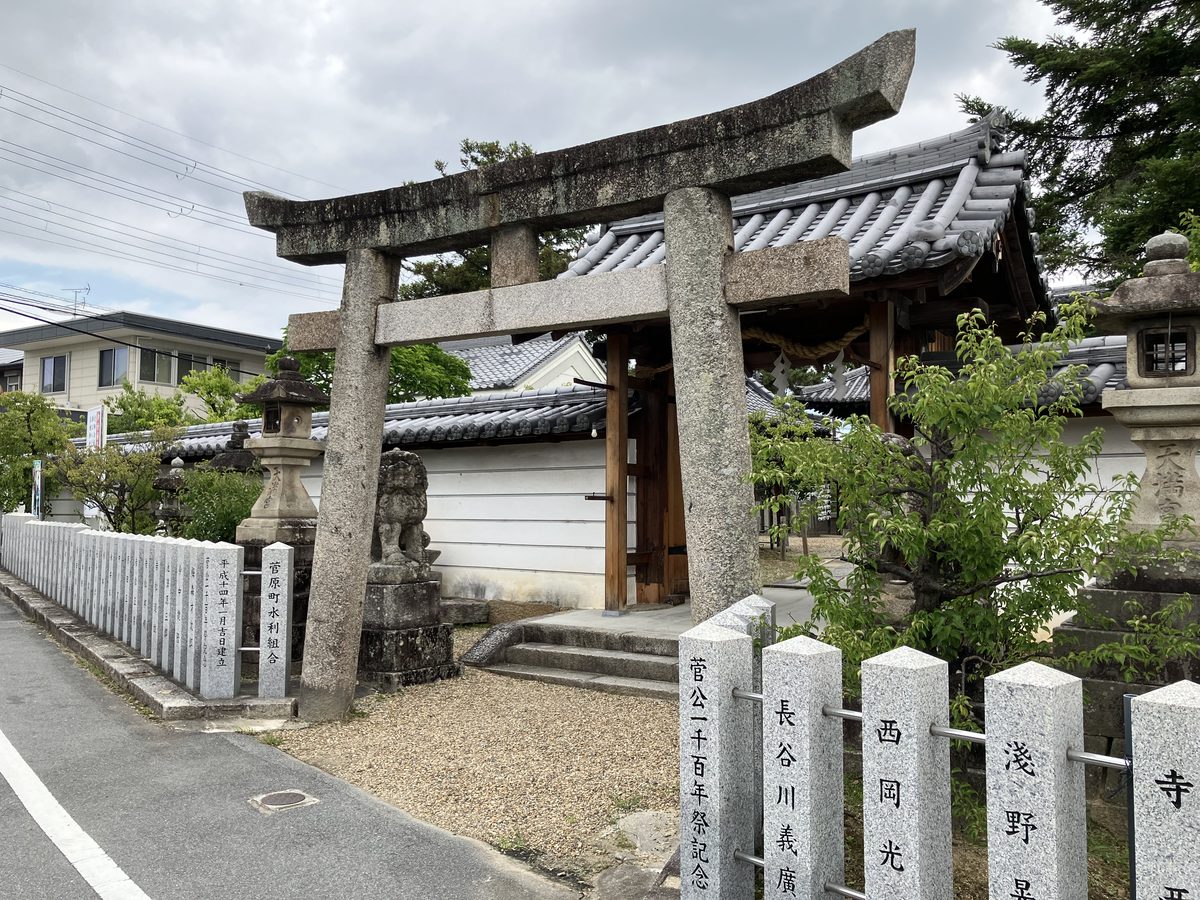
How did you enjoy our previous guide, No. 011 — Kikoji Temple? I hope you liked Gyoki's "Trial Great Buddha Hall" and its summer-morning lotuses.
This time, in No. 012, we step out of Kikoji's South Gate and walk just two minutes to its next-door neighbor: Sugawara Tenmangu Shrine.
Tenmangu shrines dedicated to Sugawara no Michizane, revered as the god of learning, can be found all over Japan. This area of Nara, Sugawara, is where Michizane's family, the Sugawara clan, began. You could call it the "hometown" of all Tenmangu shrines — and yet, when you visit, you will be surprised at how quiet it is.
What I share here is Sugawara Tenmangu as I visited it on Saturday, July 11, 2026, right after Kikoji. The shrine's plum bonsai festival is held around February, so the season is different, but I hope this helps you plan a trip next year.
This article guides you, with photos, along the walk from Kikoji Temple (No. 011) (about 2 minutes, about 170 m).
Kikoji is about a 20-minute walk from the South Exit of Yamato-Saidaiji Station on the Kintetsu Nara Line. The route from the station to Kikoji is explained with photos in No. 011.
About Sugawara Tenmangu — A Quiet Shrine Where the Sugawara Clan Began
Three Deities, and the Origin of the Name "Sugawara"
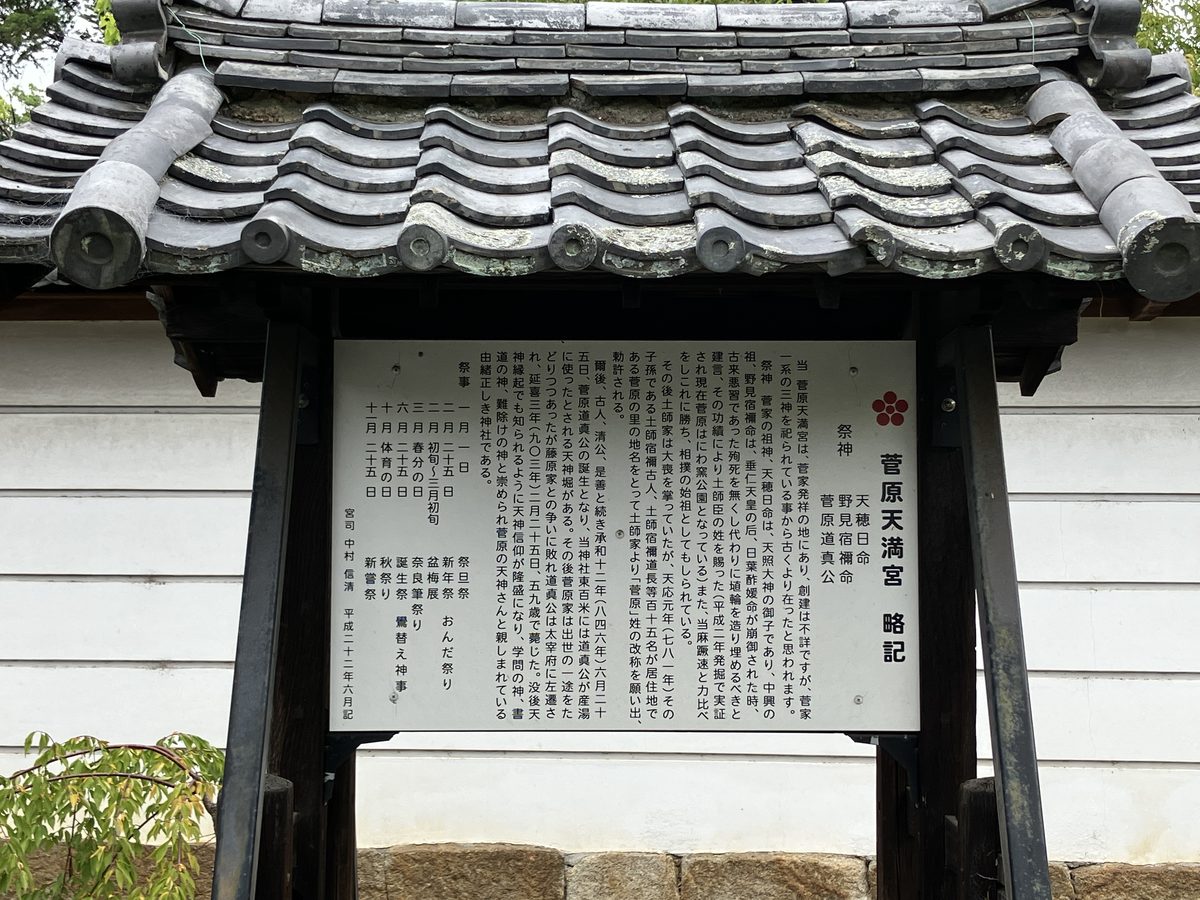
According to the shrine's history board in the grounds, no one knows exactly when Sugawara Tenmangu was founded, but it is thought to have stood here since ancient times. It is said to be one of the old shrines listed in the Engishiki, a Heian-period record.
The shrine enshrines three deities:
- Ame-no-Hohi-no-Mikoto: regarded as an ancestor of the Sugawara clan
- Nomi-no-Sukune-no-Mikoto: an ancestor of the Sugawara clan. Legend says he proposed making and burying clay figures, haniwa, instead of burying people alive with the dead, and was given the family name "Haji." Because of a legendary trial of strength, he is also regarded as the founder of sumo
- Sugawara no Michizane: known as Tenjin-sama, the god of learning
Then, in 781, members of the Haji clan living here asked to change their family name to "Sugawara," after the name of the land, and permission was granted. That was the beginning of the Sugawara clan. Some sixty years later, in 845, Michizane was born. The shrine's history board says he was born here.
By the way, as I explained in No. 011, Kikoji's original name, "Sugawara-dera," also came from the name of this land, "the village of Sugawara." The temple and the shrine next door are connected by the same place name.
Michizane's Light and Shadow
Michizane excelled at learning from a young age and rose to the post of Minister of the Right at the imperial court. But in 901 he was demoted and sent to Dazaifu in Kyushu, and in 903 he died there, never returning to the capital.
Later, Michizane came to be worshipped as "Tenjin-sama," and in time he became loved throughout Japan as the god of learning. Today, during exam season, Tenmangu shrines across the country fill with people praying to pass.
The light: being celebrated across the country as the god of learning. The shadow: being driven from the capital before his work was done and ending his life far away. Everything in this world has both light and shadow. That is simply the way of nature.
And the place where Michizane's family began is astonishingly quiet. To me, that is the greatest pleasure of visiting Sugawara Tenmangu.
Major Tenmangu Shrines in Japan, and Sugawara Tenmangu
According to Kitano Tenmangu, there are about 12,000 Tenmangu and Tenjin shrines dedicated to Michizane across Japan. Here are some of the major ones and their connection to him.
← Scroll sideways to see the whole table →
| Shrine | Location | Connection to Michizane |
|---|---|---|
| Dazaifu Tenmangu | Dazaifu, Fukuoka | Where Michizane died; the main hall stands over his grave. "Head shrine of all Tenmangu" |
| Kitano Tenmangu | Kamigyo, Kyoto | Founded in 947. "Head shrine of all Tenmangu and Tenjin shrines" |
| Osaka Tenmangu | Kita, Osaka | Founded in 949 by order of Emperor Murakami |
| Sugawara-in Tenmangu, Kisshoin Tenmangu, Kandaijin Shrine | Kyoto | Each is said to be Michizane's birthplace |
| Sugawara Tenmangu | Sugawara-higashi, Nara | Birthplace of the Sugawara clan; also said to be Michizane's birthplace |
* Checked on the official websites of Dazaifu Tenmangu, Kitano Tenmangu and Osaka Tenmangu, and on Sugawara Tenmangu's history board (November 2026). There are several traditions in Kyoto and Nara about where Michizane was born, and no single place is settled.
Unlike grand Tenmangu shrines such as Dazaifu and Kitano, crowded with worshippers, Sugawara Tenmangu is a quiet, calm shrine. It shares something of the atmosphere of Saidaiji Temple (No. 002) and Kikoji (No. 011).
Access (Basic Information)
Kikoji Temple → Sugawara Tenmangu (on foot)
· Shortest distance: about 170 m
· Time: about 2 minutes
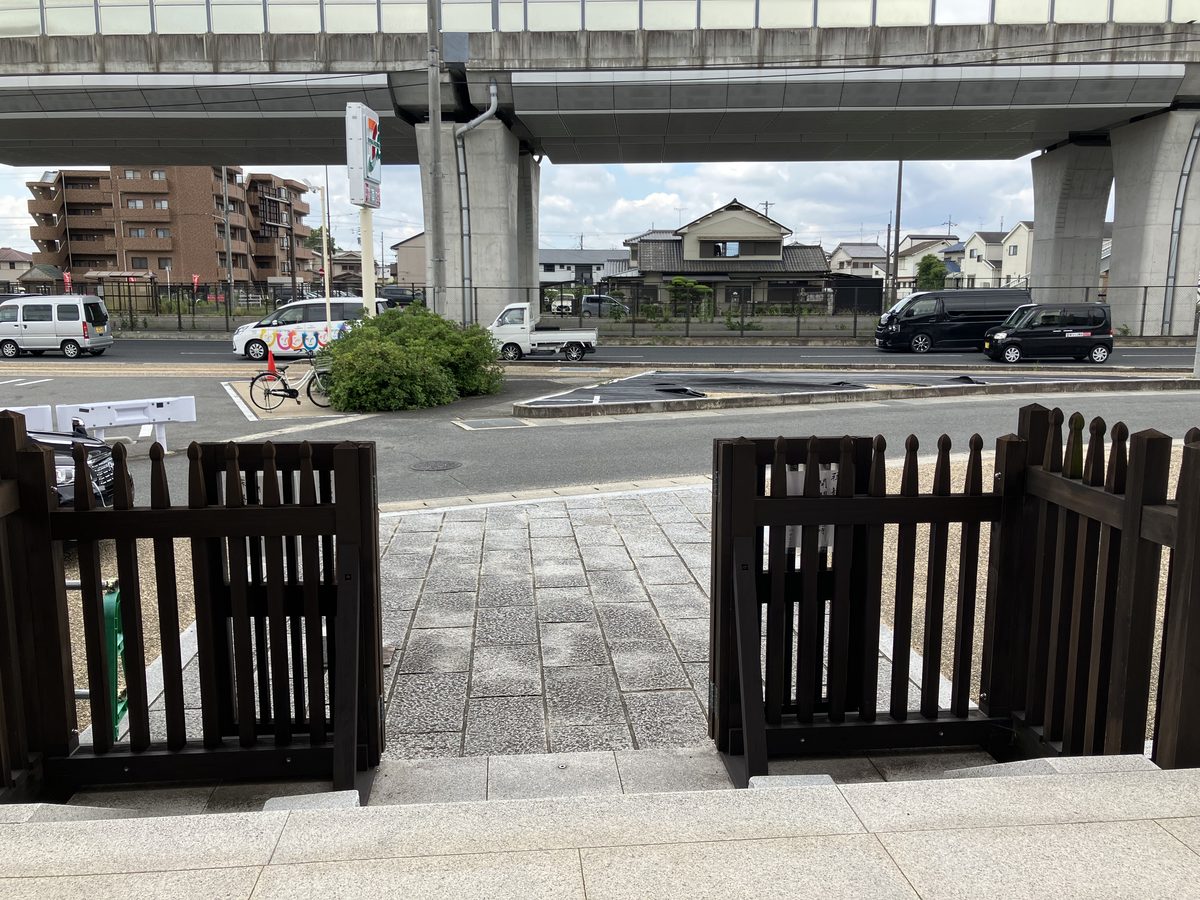
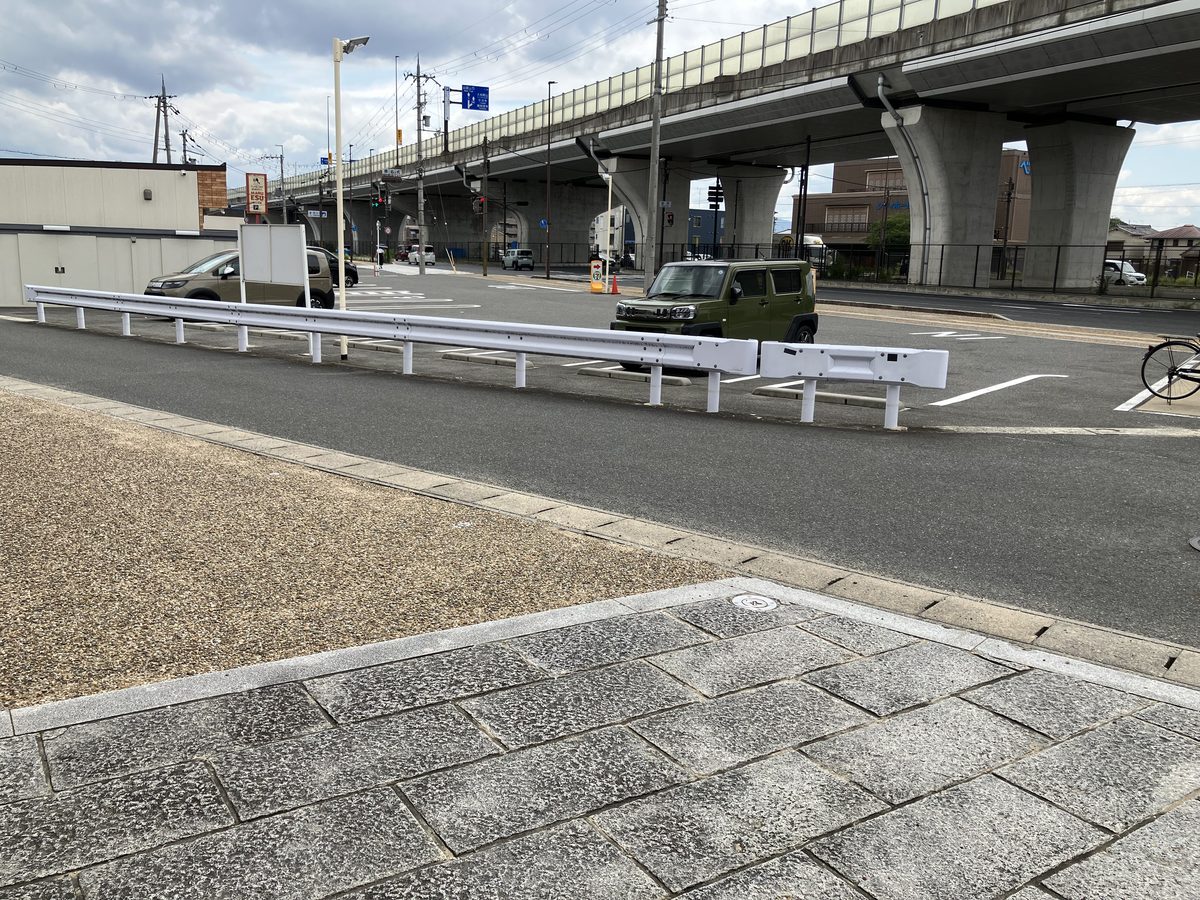
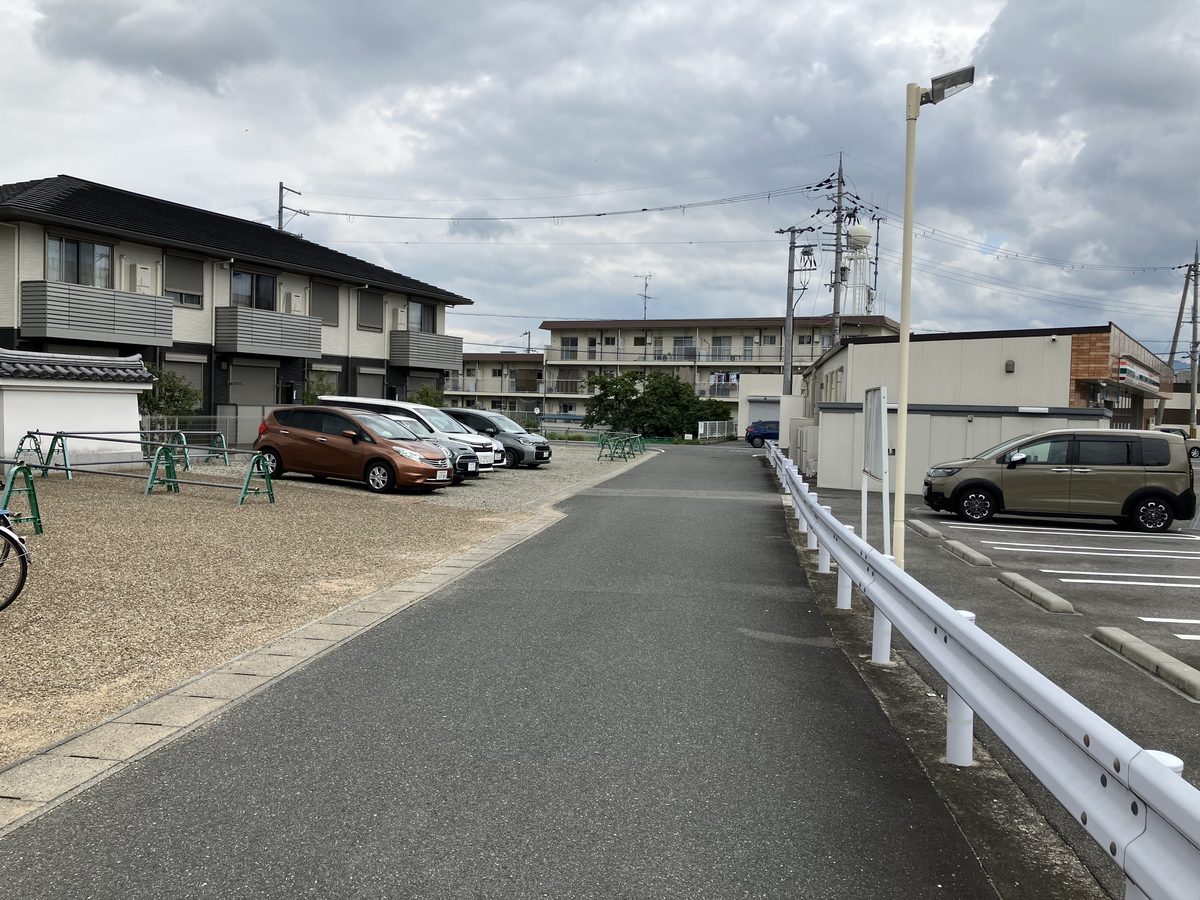
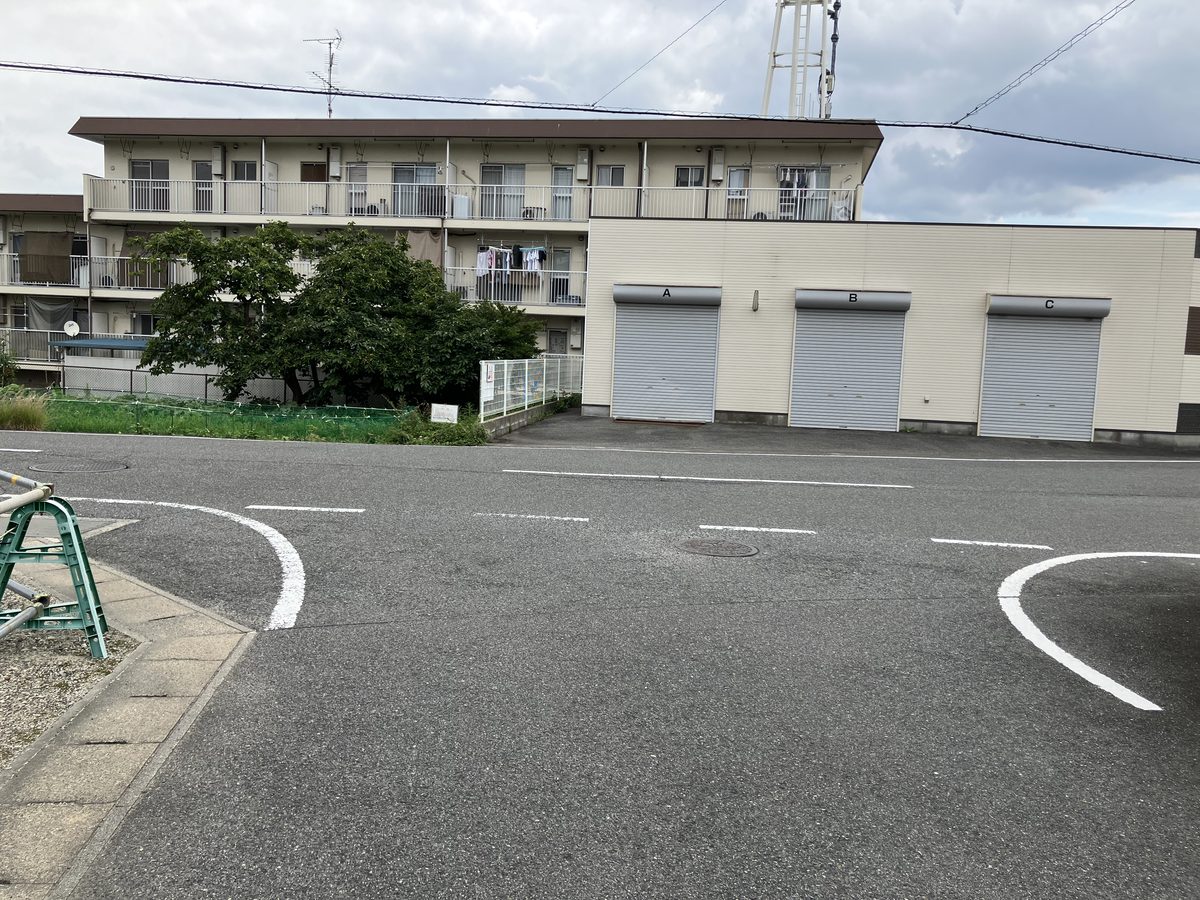
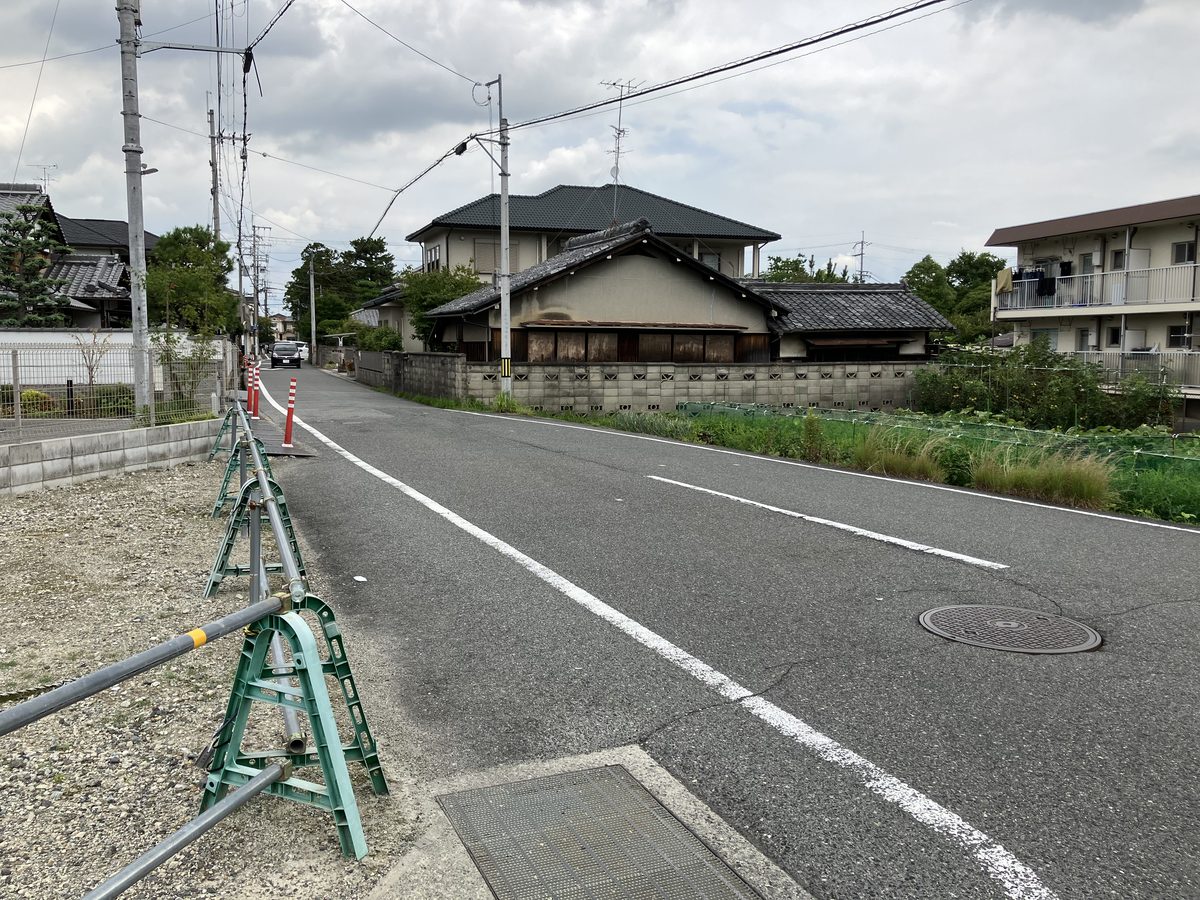
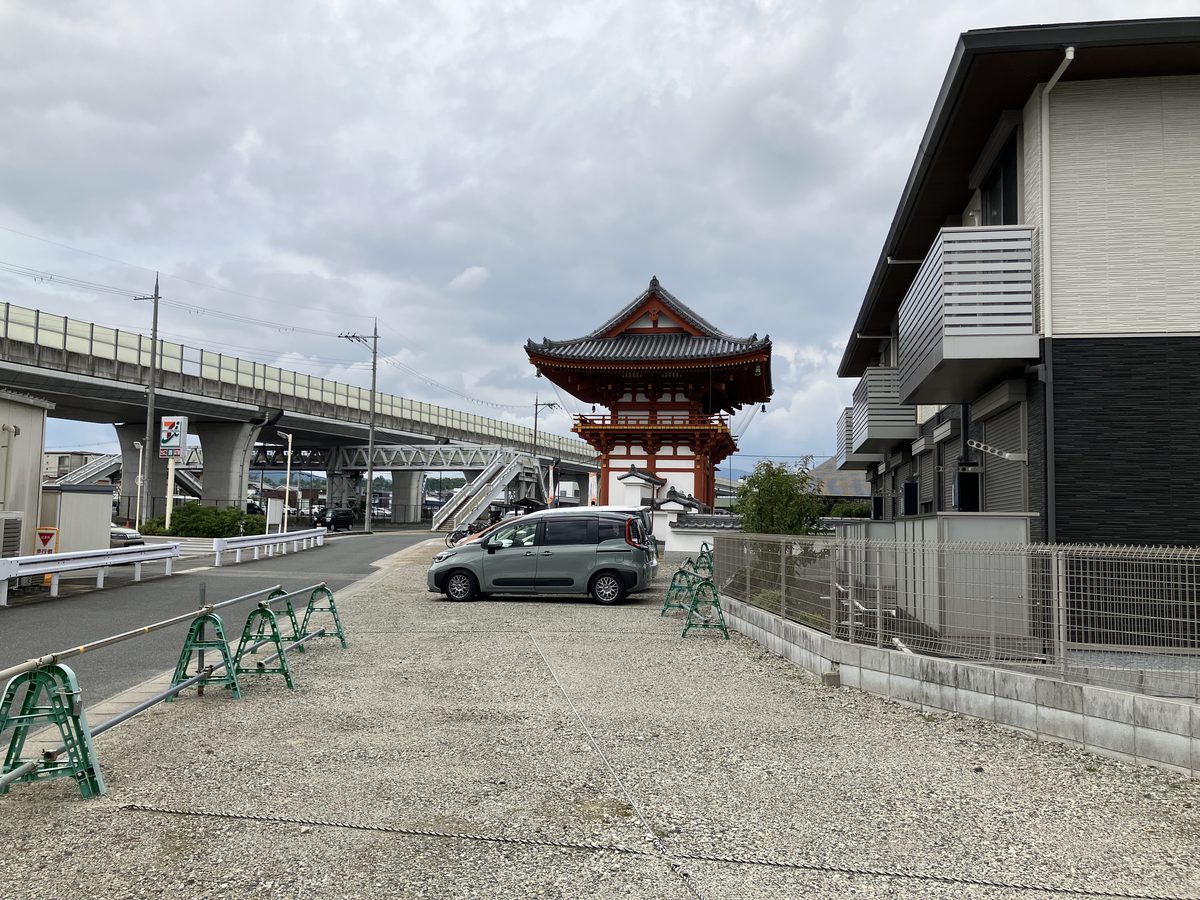
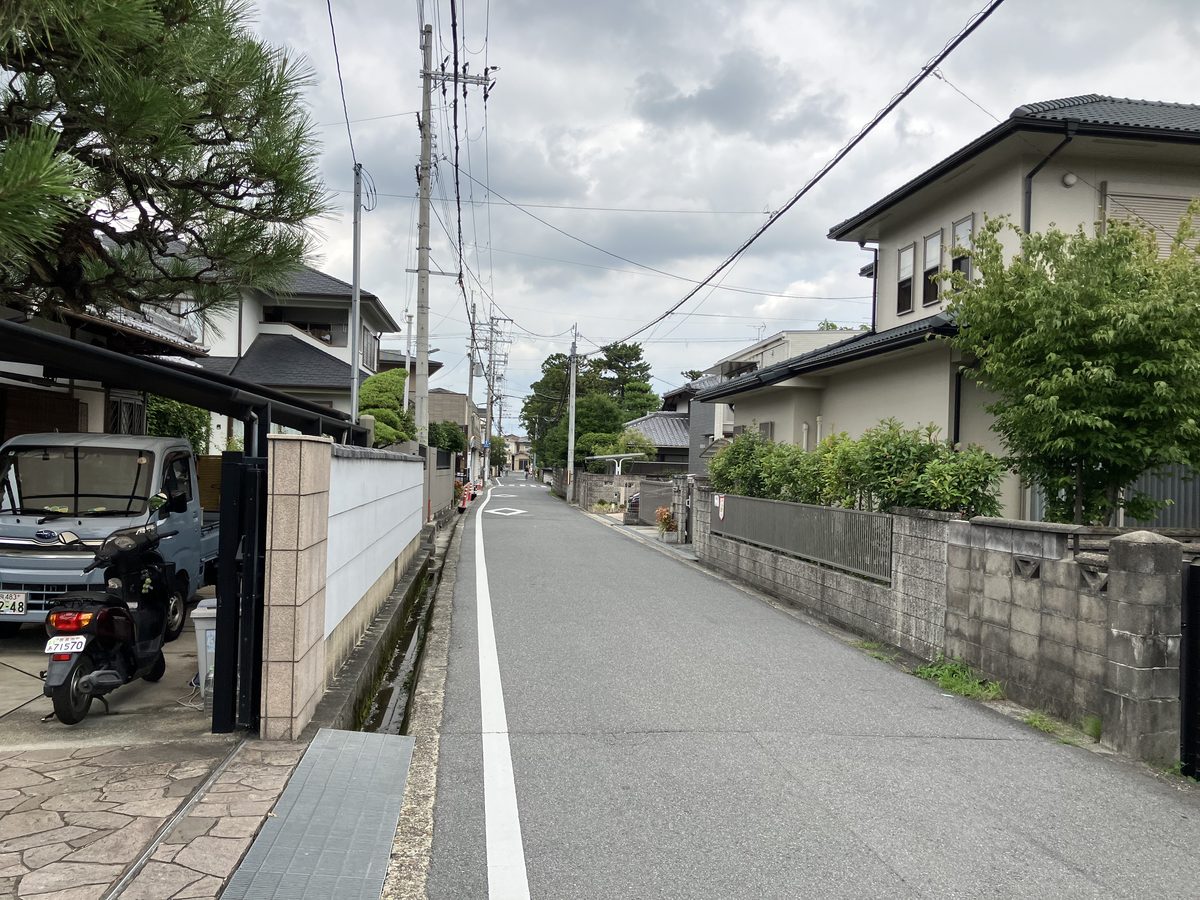
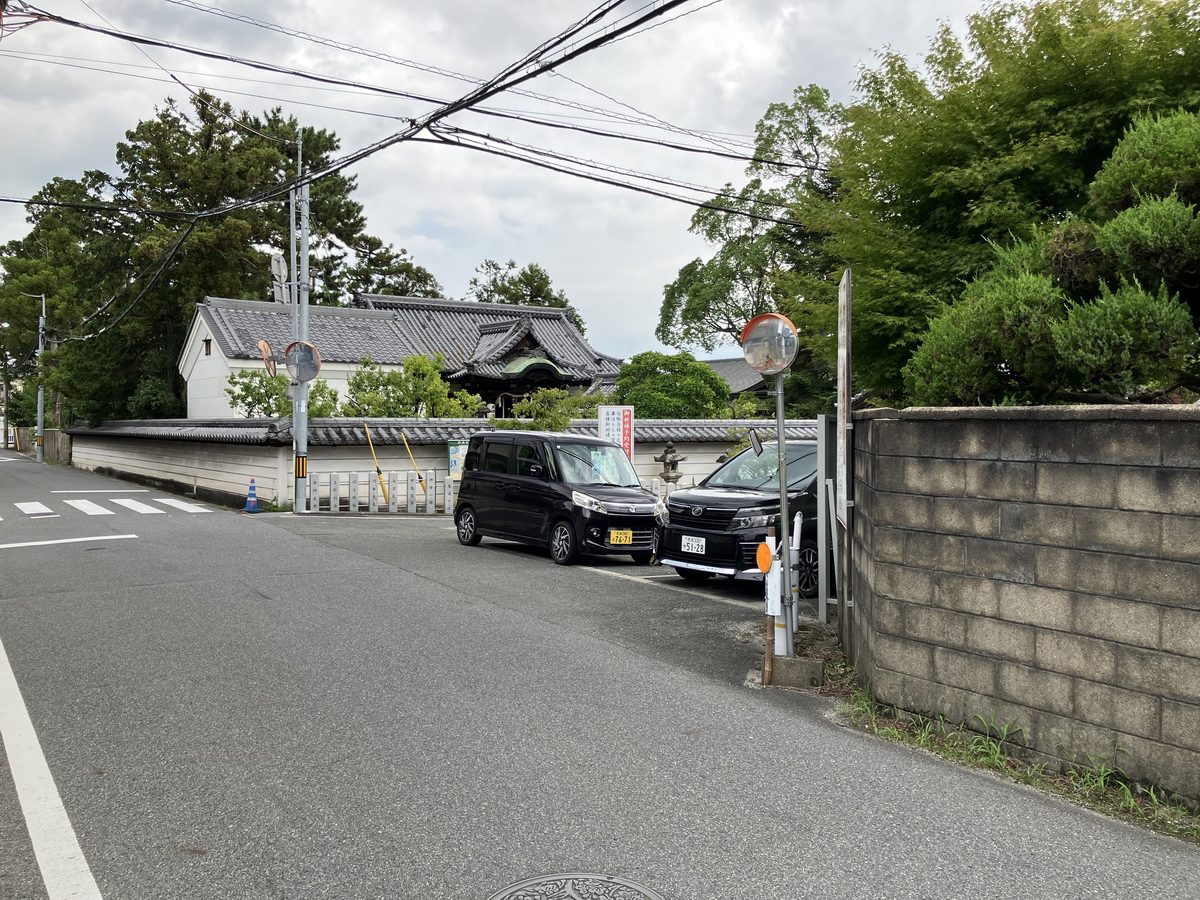
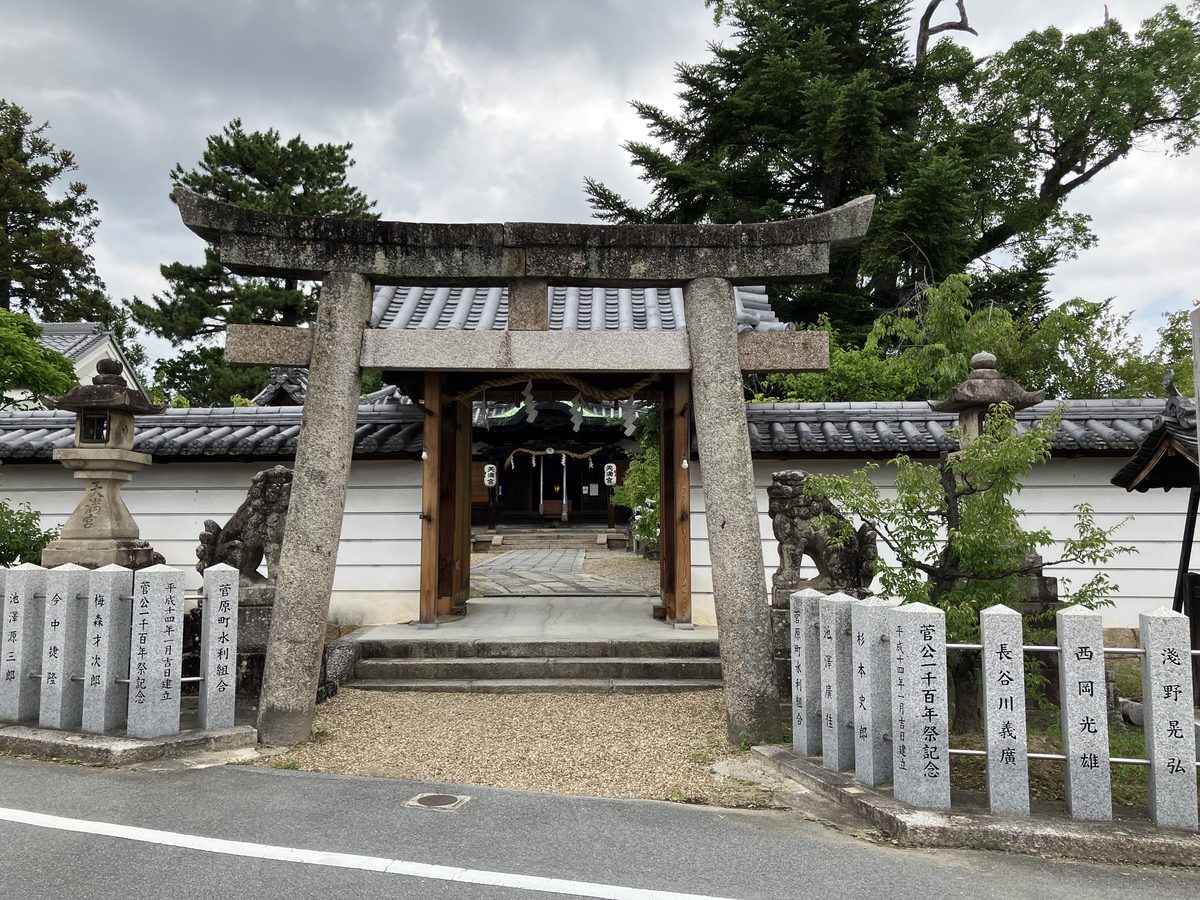
· Route: Leave Kikoji's South Gate and turn left, go a little way and turn left again, then walk straight to arrive.
How to Get to Sugawara Tenmangu from Kikoji
From Kikoji to Sugawara Tenmangu takes only about two minutes. Instead of the main road you came along, you pass through a lane between houses.

Other Ways to Get There — Directly from Yamato-Saidaiji Station, Bus
- Directly from Yamato-Saidaiji Station: about a 20-minute walk from Yamato-Saidaiji Station on the Kintetsu Nara Line (according to a tourism website). If you follow the route to Kikoji in No. 011, you can stop at Kikoji on the way and arrive in about the same time.
- From Amagatsuji Station: about a 20-minute walk from Amagatsuji Station on the Kintetsu Kashihara Line (according to a tourism website).
- Bus: about 15 minutes by Nara Kotsu bus from Gakuen-mae Station on the Kintetsu Nara Line; get off at "Sugawara Tenmangu" (according to a tourism website).
Before you go, please check the latest timetable and bus stops on the official Nara Kotsu website.
Walking the Grounds — Reclining Ox Statues and the Trees Around the Main Hall
This is how I go around: learn at the entrance → the gate and the water basin → look around the grounds on the way to the main hall → the reclining ox statues in front of the main hall → pray at the main hall → the amulet office → walk once around the main hall → bow and leave. Going slowly, it takes about 30 minutes.
Learning About This Place at the Entrance
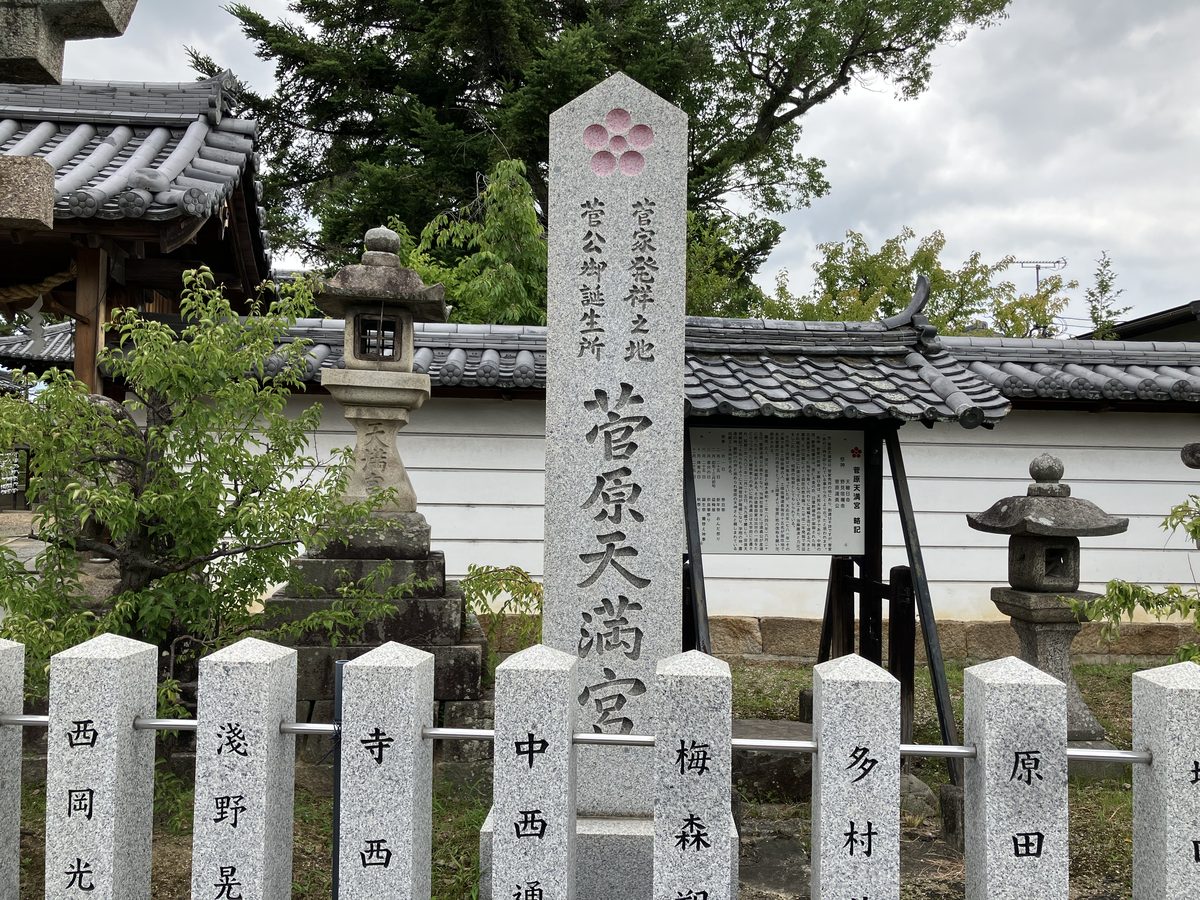
First, I learn about this place from the stone pillar and the signboard at the entrance. The pillar is carved with the name "Sugawara Tenmangu." Above it are the words "Birthplace of the Sugawara family" and "Birthplace of Lord Michizane," topped with a plum-blossom crest.
Beside the gate is the board with the shrine's history. The three deities and the origin of the name "Sugawara," introduced in "About Sugawara Tenmangu" above, are written here.
Through the Gate and the Water Basin
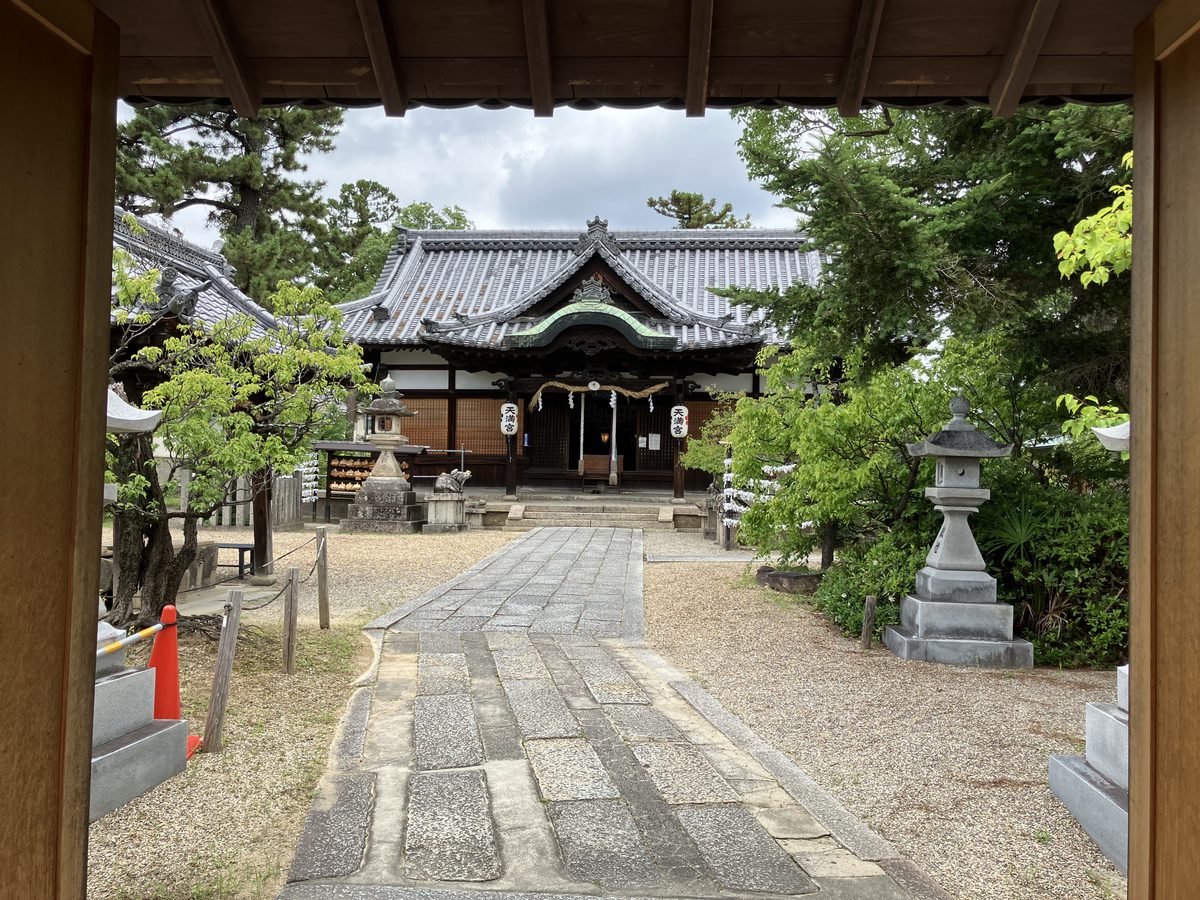
Pass through the gate, and the main hall comes into view at the end of the stone-paved approach.
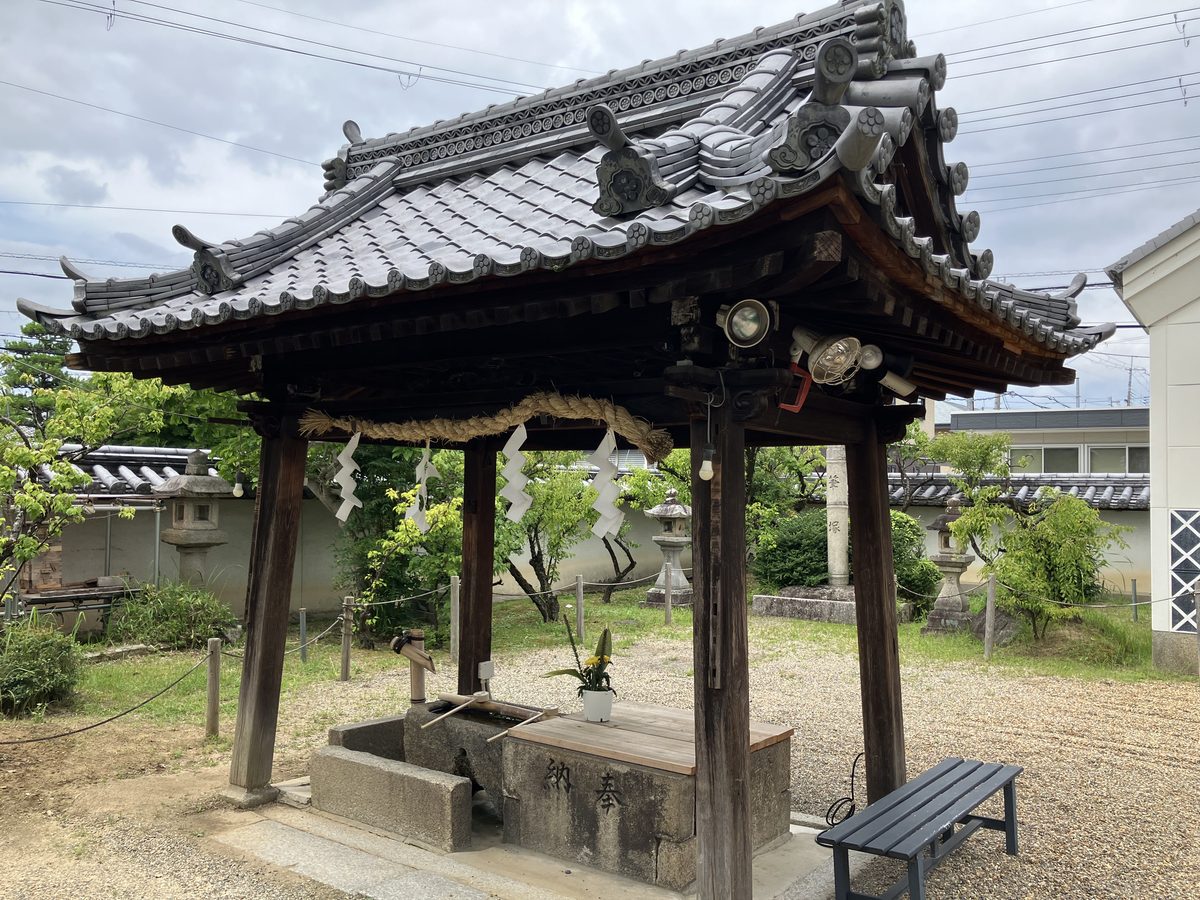
Beside the approach stands the water basin pavilion (temizuya).
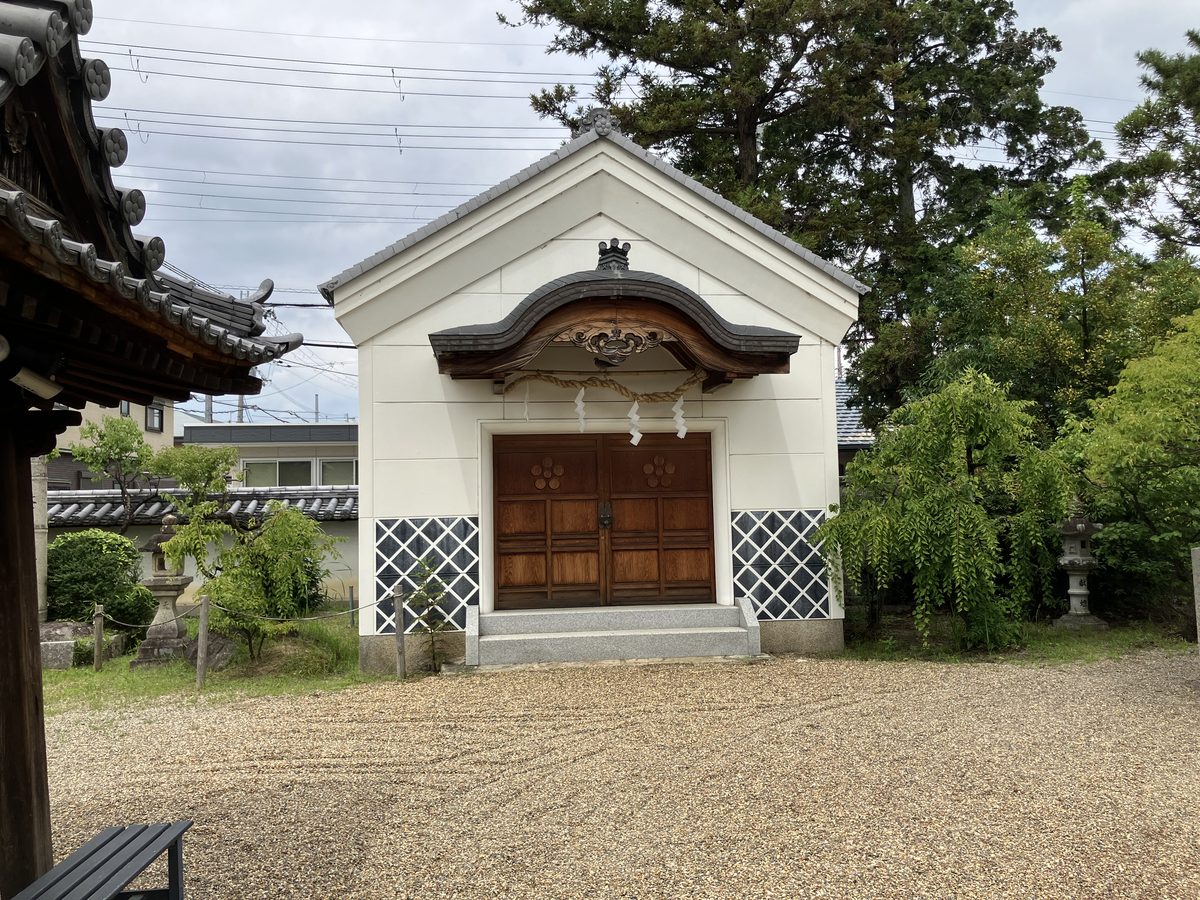
Looking Around on the Way to the Main Hall
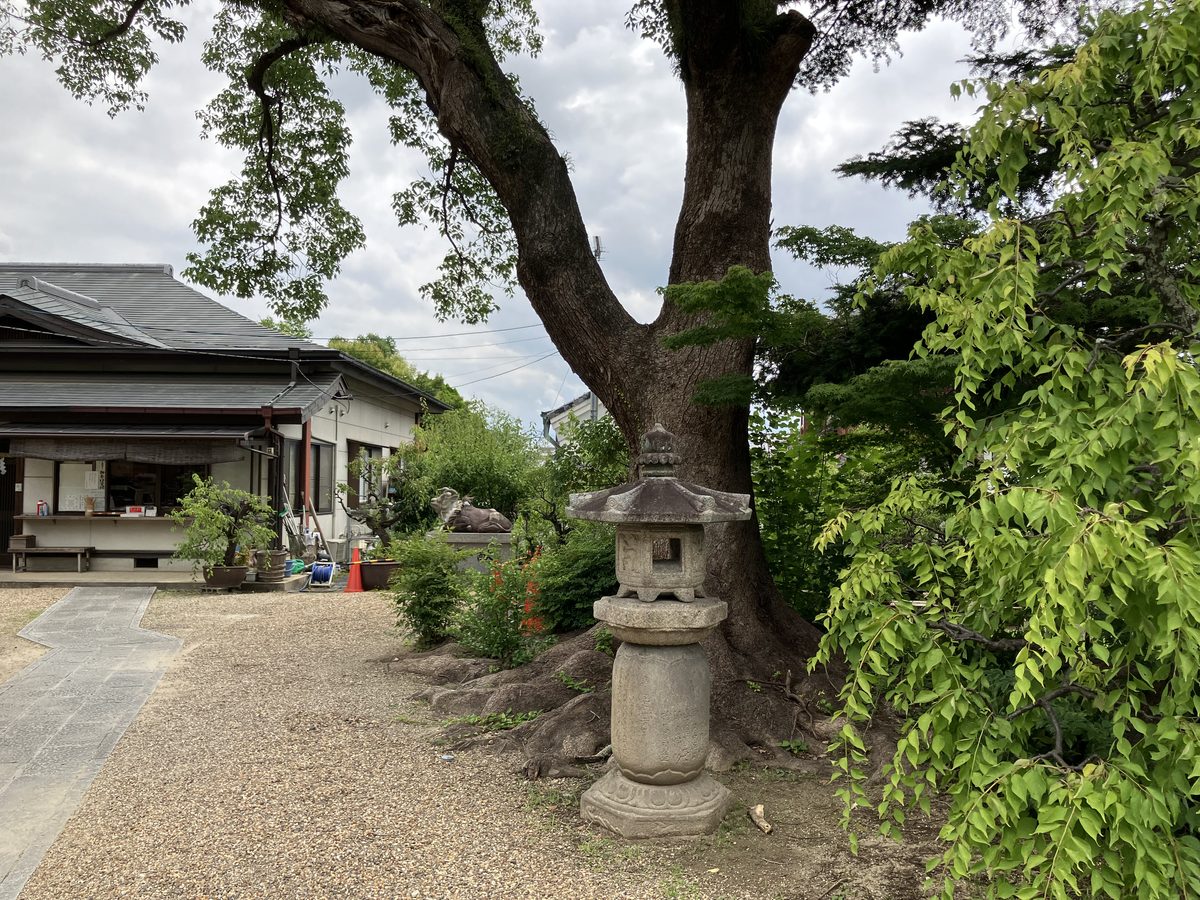
On the way to the main hall, I look around the grounds. Here you will also find buildings of a kind you rarely see in everyday life.
Meeting the Reclining Oxen in Front of the Main Hall
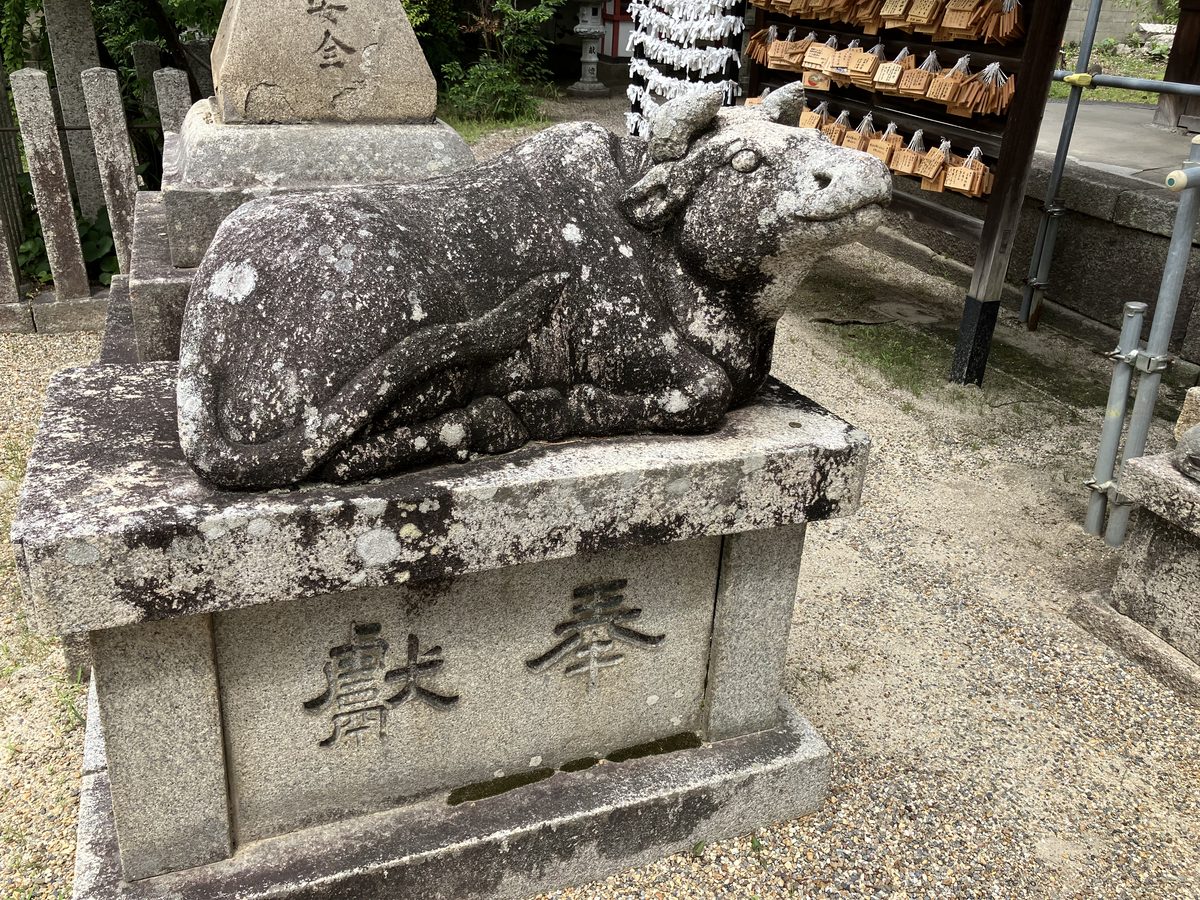
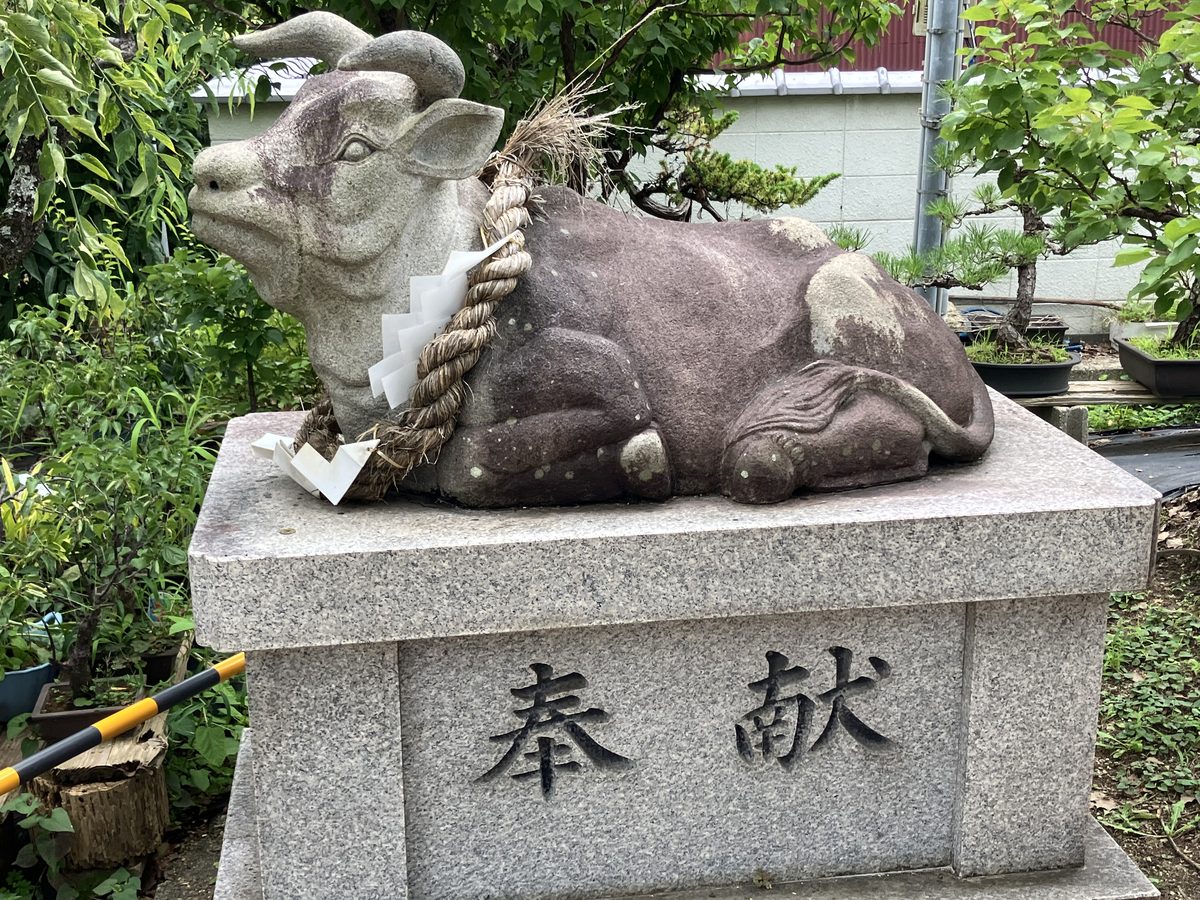
On both sides in front of the main hall, statues of oxen lying down greet you. These are "gagyu" (reclining ox) statues, often seen at Tenmangu shrines.
According to Dazaifu Tenmangu, after Michizane died, the ox pulling the cart carrying his remains lay down and would not move, and Michizane was buried at that spot. Since then, oxen have been cherished as messengers of Tenjin-sama, and the ox statues at Tenmangu shrines are shown lying down.
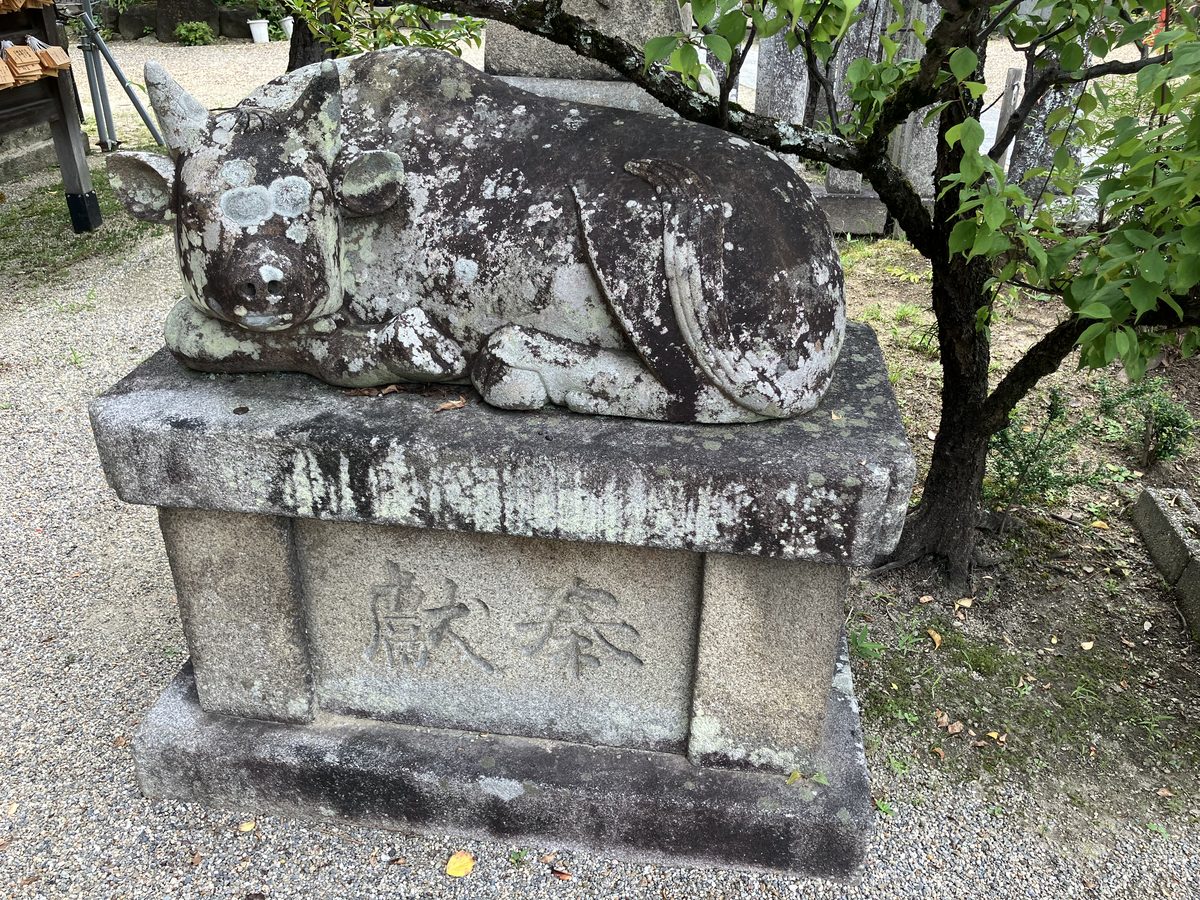
Around the main hall, there are also many small reclining oxen.
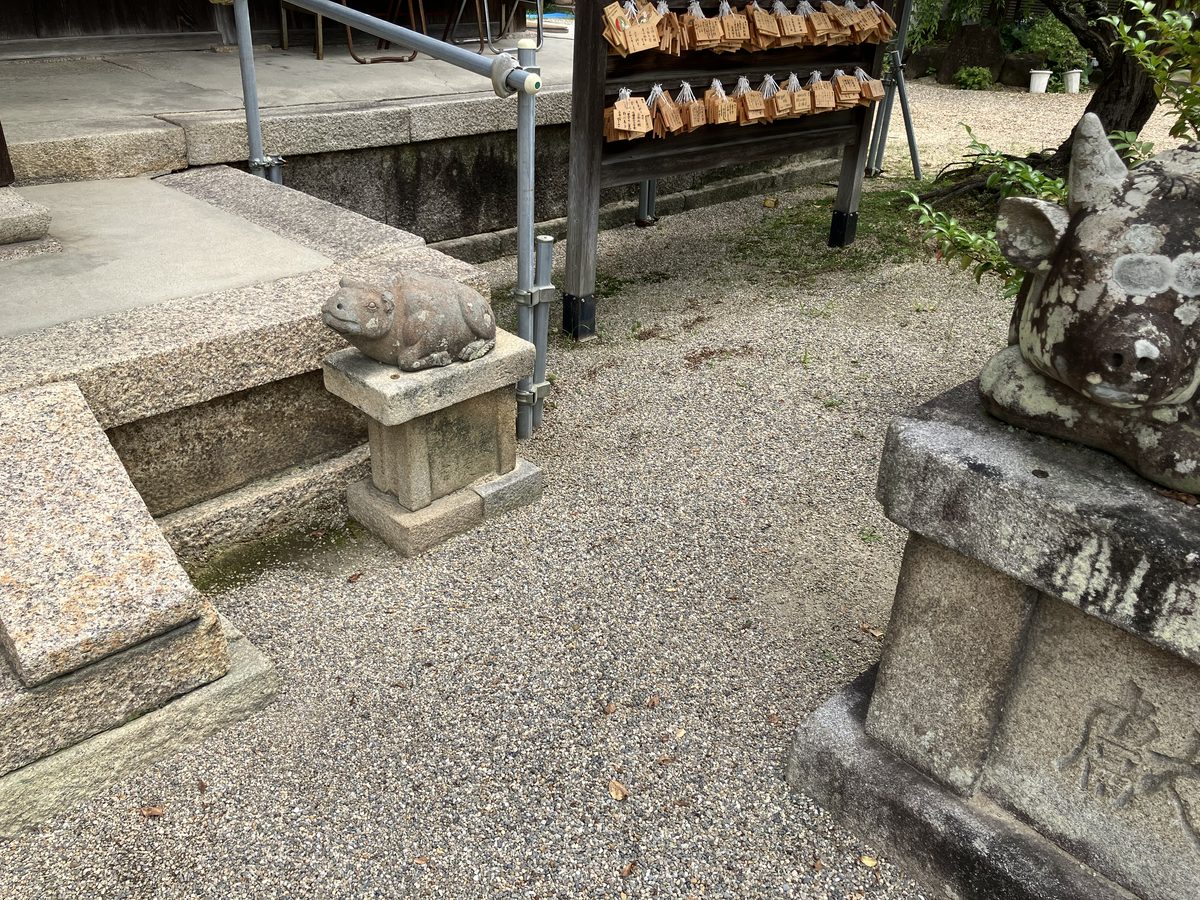
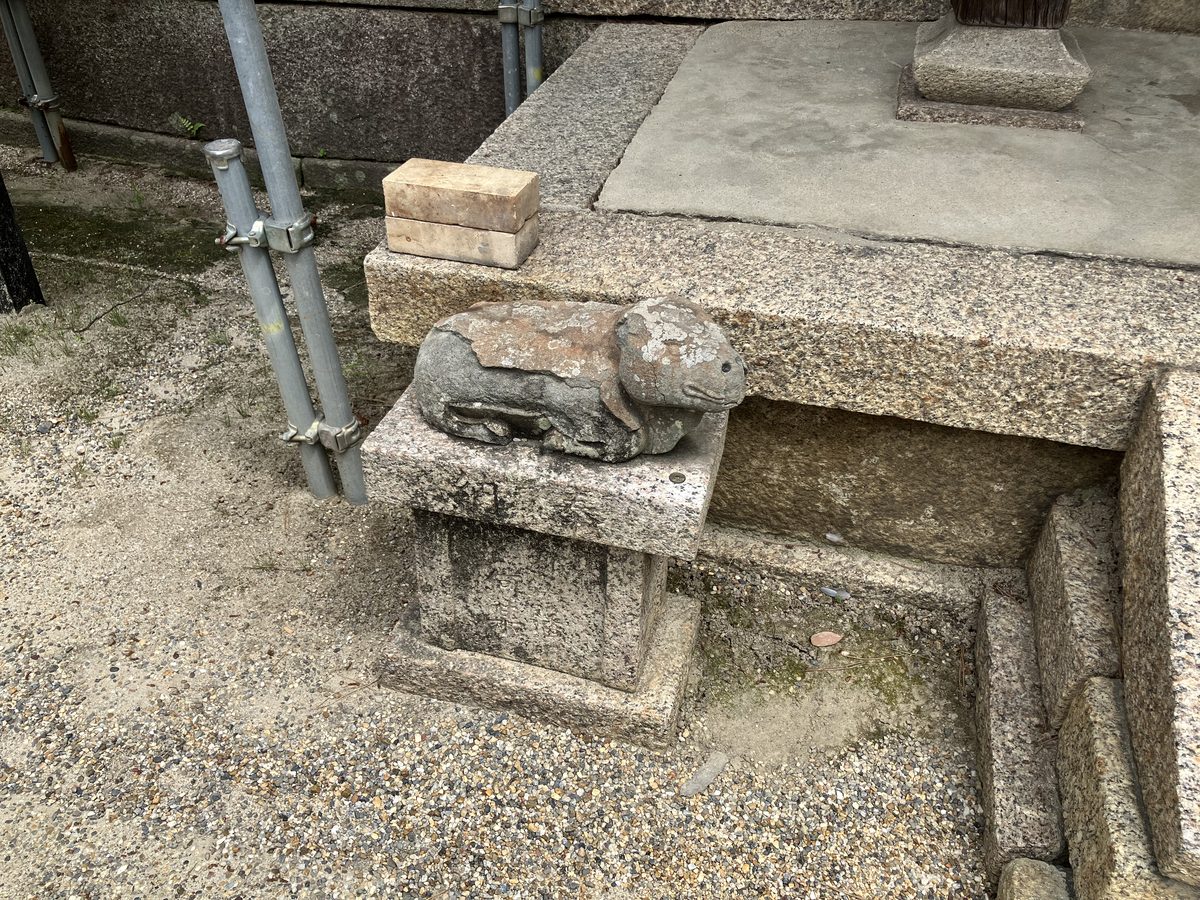
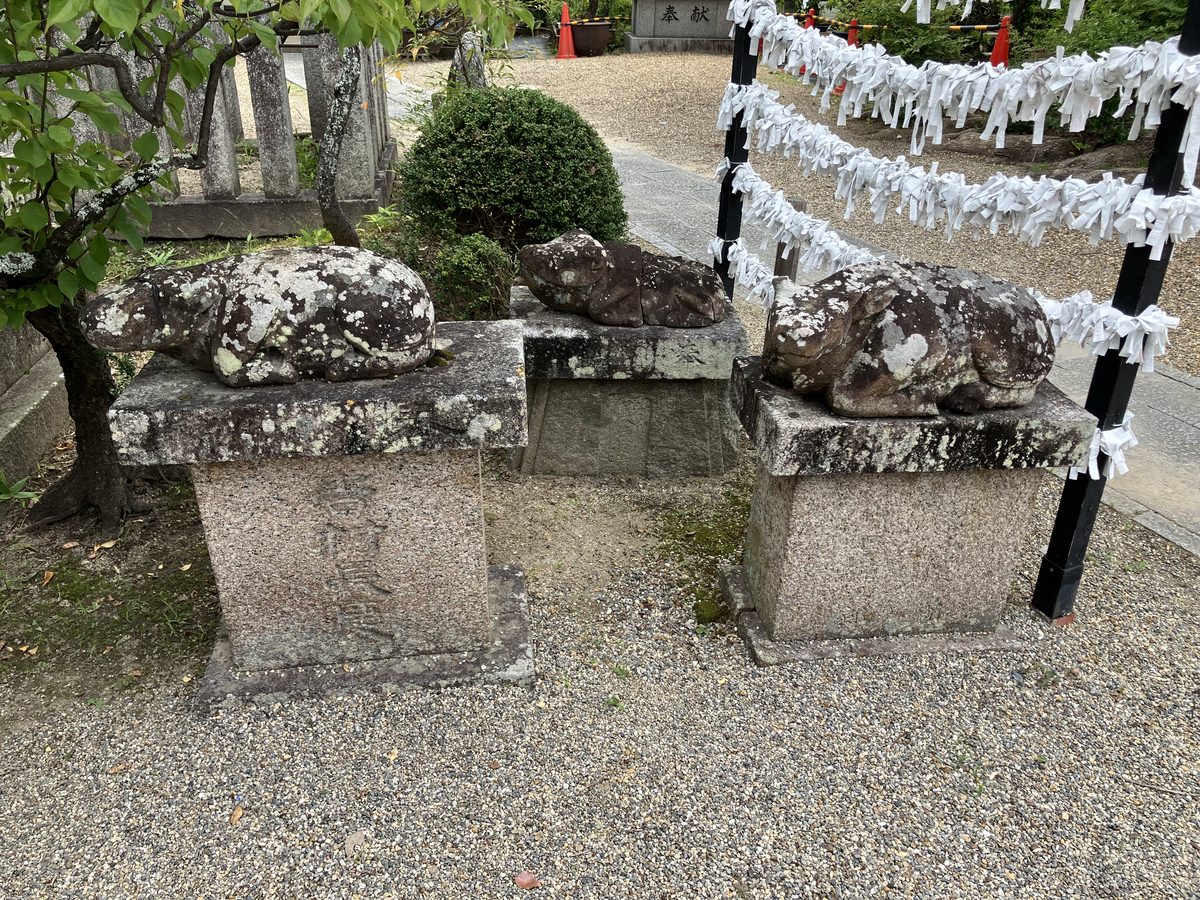
Beside the main hall hung a great many ema (votive tablets). After praying, I head toward the amulet office.
The Amulet Office and a Splendid Reclining Ox
If you would like amulets or other charms, please ask at the amulet office.
Just before the amulet office, there is another splendid reclining ox, wearing a sacred straw rope.
A Walk Around the Main Hall, Surrounded by Trees
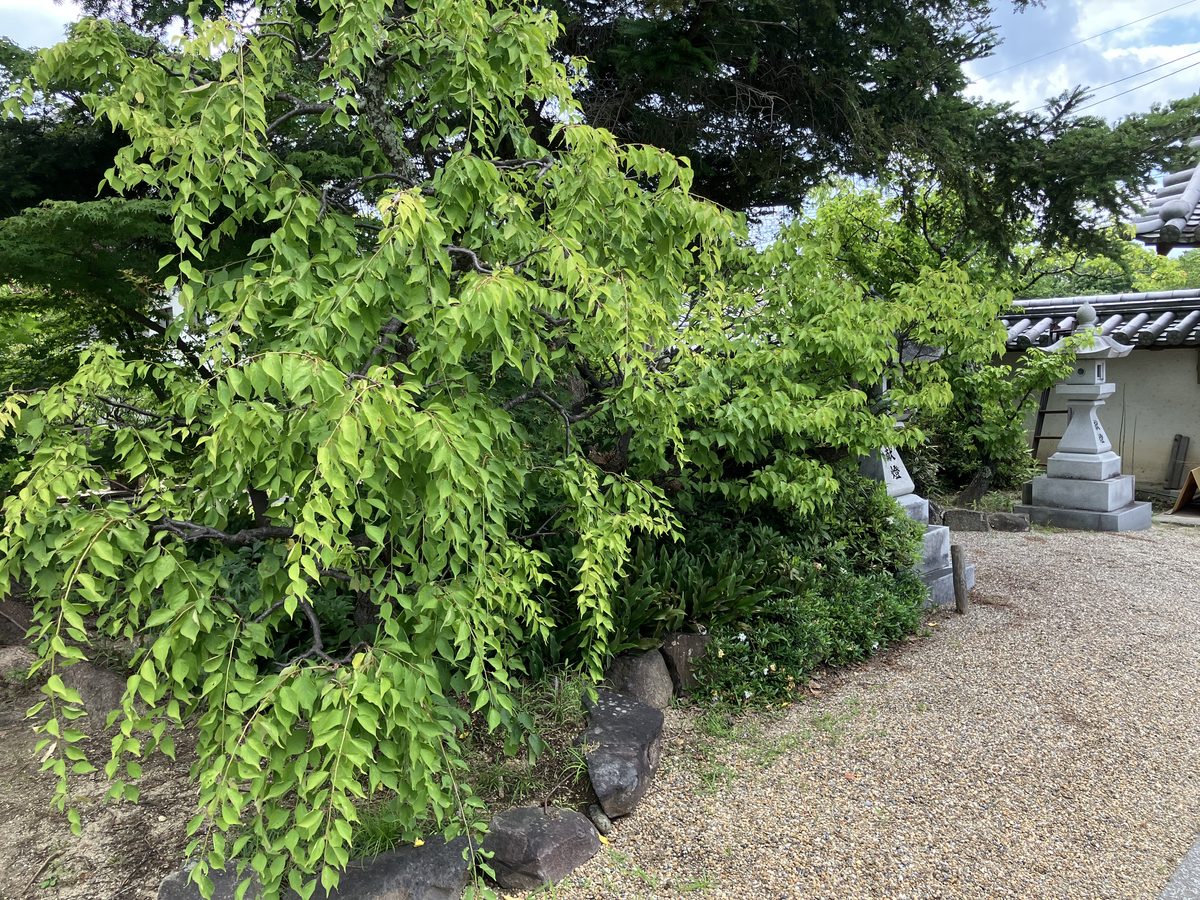
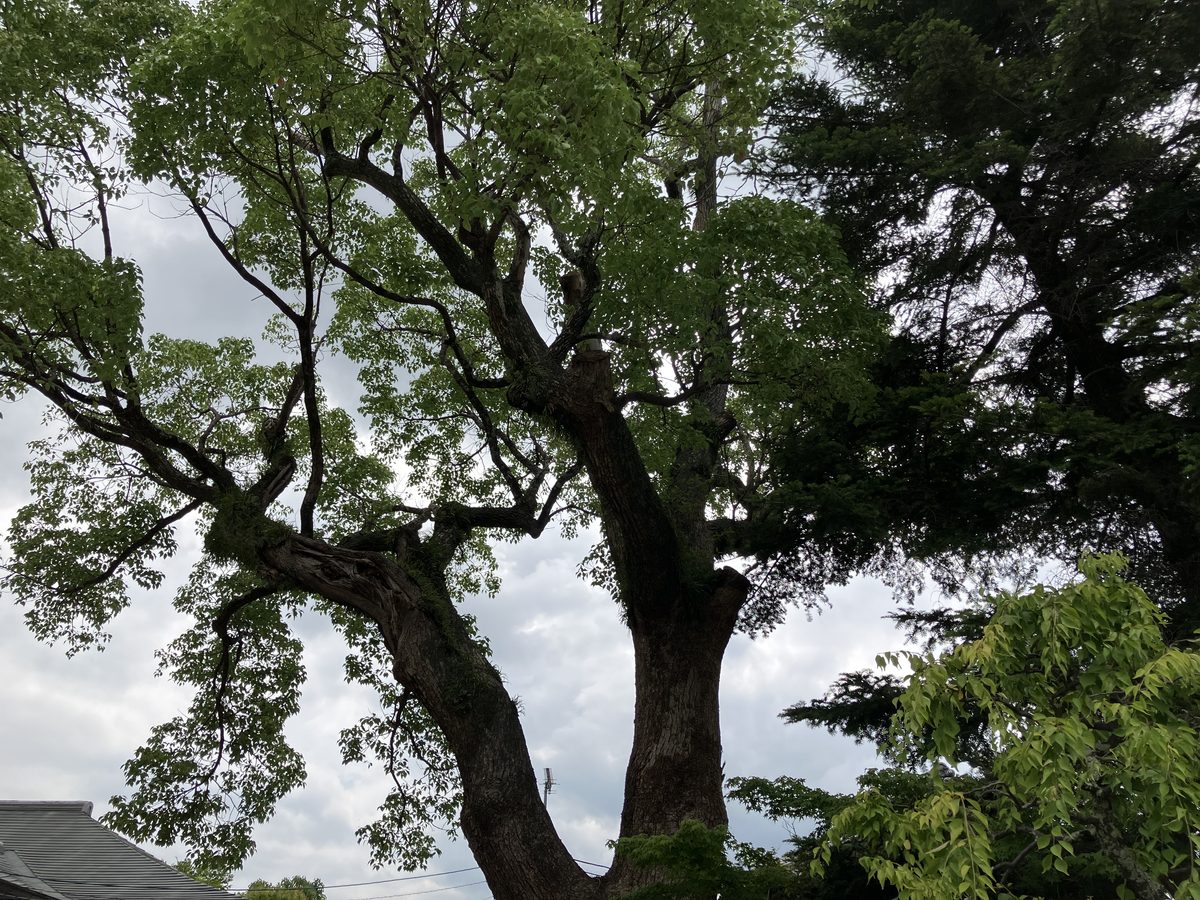
The grounds have magnificent trees. I always walk slowly around: main hall → amulet office → right side of the main hall → behind the main hall → left side of the main hall → main hall. Surrounded by trees, I feel a sense of the sacred.
Finally, I bow lightly to the main hall and leave through the gate.
Related Places Close By
- Tenjin-bori: According to the shrine's history board, about 100 m east of the shrine is "Tenjin-bori," the pond said to have been used for Michizane's first bath.
- Sugawara Haniwa Kiln Park: According to the shrine's history board, the remains of haniwa kilns found in an excavation in 1990 have become "Sugawara Haniwa Kiln Park."
Visitor Information — Amulet Office, Plum Bonsai Festival
| Address | 1-15-1 Sugawara-higashi, Nara City |
|---|---|
| Deities | Ame-no-Hohi-no-Mikoto, Nomi-no-Sukune-no-Mikoto, Sugawara no Michizane |
| Admission | Free to visit the grounds (500 yen only during the plum bonsai festival; free for junior high school students and younger) |
| Amulet office | 9:00–16:00 |
| Plum bonsai festival | Usually early February to early March (in 2026: February 1 – March 1, 9:00–16:00) |
| Time needed | About 30 minutes (in my case) |
| Access | About 2 minutes on foot from Kikoji (route with photos) About 20 minutes on foot from Yamato-Saidaiji Station on the Kintetsu Nara Line |
* Checked on the shrine's history board in the grounds and a tourism website (November 2026). I could not find an official website for Sugawara Tenmangu. Amulet office hours and festival dates may change, so please check before you go. The time needed is my own estimate.
📷 Photos taken on Saturday, July 11, 2026
Recommended Way to Visit — First Thing in the Morning, Together with Kikoji
My recommendation is to go first thing in the morning: Yamato-Saidaiji Station → Kikoji → Sugawara Tenmangu.
If you are enjoying the "Nara Nishinokyo Lotus Road" in lotus season, the route Yamato-Saidaiji Station → Saidaiji → Kikoji → Sugawara Tenmangu is also a good choice.
Either way, you should be mostly done by the end of the morning. Afterwards, head back to Yamato-Saidaiji Station and have lunch or a rest at a place such as "Nara Family," the shopping center on the North Exit side.
If you visit in Lotus Road season
In the hot summer months you will get thirsty. Drinks from the convenience stores along the way will not be enough, and you will want somewhere to rest. Drink water often, and take a break near Yamato-Saidaiji Station on the way back.
🏨 Staying Overnight in Nara?
If you plan to visit Kikoji and Sugawara Tenmangu first thing in the morning, it is convenient to stay near Yamato-Saidaiji Station or along the Kintetsu Nara Line. There are four hotels you can book on Klook: Kamenoi Hotel Nara, introduced in No. 009 — Heijo Palace Site (free shuttle from the South Exit of Yamato-Saidaiji Station, reservation required by the day before; according to the hotel), the Nara Royal Hotel, introduced in No. 006–008, and Novotel Nara and the JW Marriott Hotel Nara, introduced in No. 005.
Ad
Besides these four, you can also search for and book other hotels and ryokan (Japanese inns) in Nara on Klook. Below are some of the places to stay in Nara listed on Klook.
Ad
Seasonal Highlights and Annual Events
- Plum bonsai festival: usually early February to early March. Plum bonsai are displayed in the grounds (in 2026, February 1 – March 1; said to feature about 130 varieties and 200 pots).
- Birthday Festival and Usokae ritual: June 25 (Michizane's birthday).
- New Year Festival and Onda Festival: January 25.
- Autumn Festival: October.
- Niiname-sai (harvest festival): November 25.
(According to the shrine's history board and a tourism website. Dates may change.)
Frequently Asked Questions
How much does it cost to visit Sugawara Tenmangu?
Visiting the grounds is free. Only during the plum bonsai festival is there a charge of 500 yen (free for junior high school students and younger), according to a tourism website.
How long does it take from Kikoji?
About 170 m from Kikoji's South Gate, or about 2 minutes on foot. This article shows the way with photos.
Was Sugawara no Michizane born here?
The shrine's history board says Michizane was born here. However, several shrines in Kyoto are also said to be his birthplace, and no single place is settled. The history board does state that this is where the Sugawara clan began.
Why are there ox statues at Tenmangu shrines?
Because oxen are regarded as messengers of Tenjin-sama. According to Dazaifu Tenmangu, Michizane was buried where the ox pulling the cart with his remains lay down and would not move. That is why the ox statues at Tenmangu shrines are shown lying down, as "gagyu" (reclining oxen).
Can students preparing for exams visit?
Yes. Sugawara Tenmangu enshrines Michizane, the god of learning, and is described as a shrine visited by people from all over Japan praying to pass exams. Amulets are available at the amulet office.
How much time should I allow?
In my case, about 30 minutes: reading the history board at the entrance, meeting the reclining oxen and walking slowly around the main hall.
When is the plum bonsai festival?
Usually from early February to early March. In 2026 it was held from February 1 to March 1, 9:00–16:00. The dates change from year to year, so please check before you go.
The Charm of Sugawara Tenmangu
How did you enjoy this report?
Sugawara Tenmangu stands in the place where the Sugawara clan — the family of Michizane, the god of learning — began. It could be called the "hometown" of all Tenmangu shrines, and yet, when you visit, it is astonishingly quiet and calm.
Everything in this world has its light and its shadow. That is simply the way of nature. Here, in the very place where the Sugawara clan began, you can glimpse not only the light of Michizane celebrated as the god of learning, but also the shadow of a family tossed about by history. Unlike the grand Tenmangu shrines elsewhere, quiet and calm Sugawara Tenmangu is, I believe, just the place for seasoned travelers.
And you can also feel that this place is still carefully cherished today as a shrine of the god of learning.
Saidaiji, Kikoji and Sugawara Tenmangu: quiet temples and a shrine you can walk to from Yamato-Saidaiji Station. Please visit them together.
This blog will continue to share places with real character that most people never notice — please come and see them with your own eyes.
To the Sugawara Clan's Hometown, a Quiet Tenmangu ⛩️
Please come and visit this quiet shrine, so different from the grand Tenmangu shrines.
Surely, your own unique Nara is waiting for you.
Life is a journey. Let's walk it slowly, together.