The Unfamiliar Broadens Your World
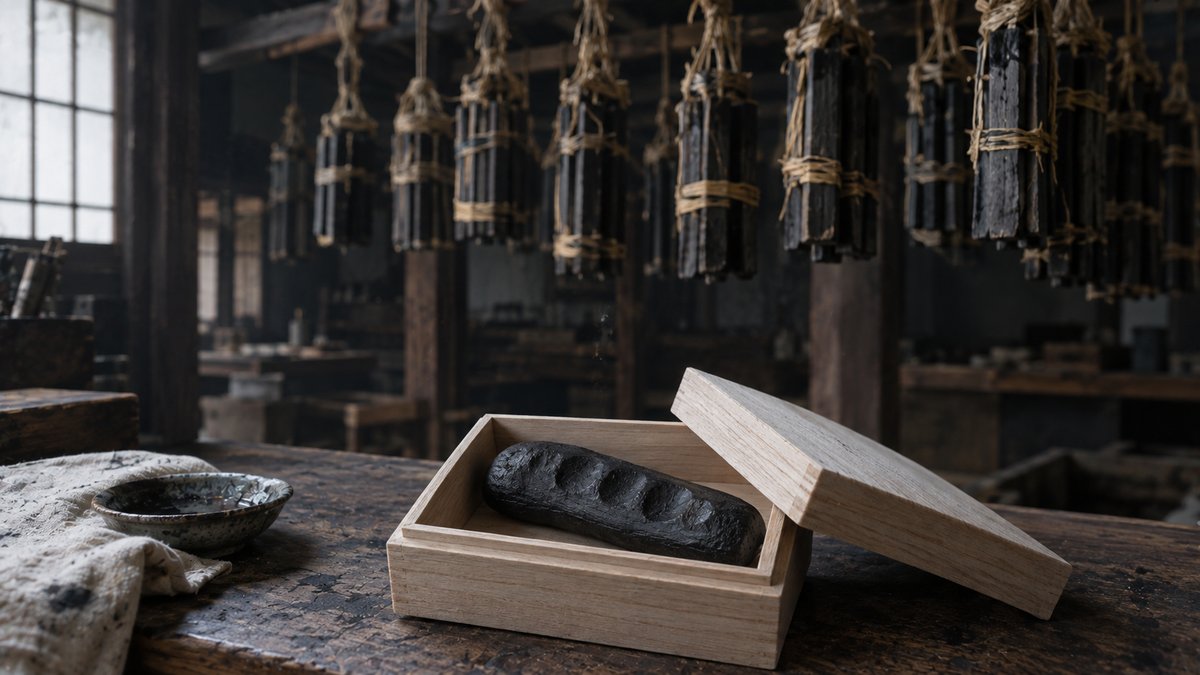
Tucked into a corner of Naramachi, Kinkoen is an ink workshop with a 150-year history. Step through its curtain, and a distinctive fragrance fills the air. Some 95 percent of the solid ink sticks used for calligraphy in Japan are said to be made right here in Nara. The "nigirizumi" experience offered at the workshop, shaping a piece of raw ink by hand, sounds at first like a simple thing to do.
That assumption falls apart the moment a rod of raw ink is placed in your hands. It is heavier than expected, with a strange softness and warmth that seems to cling to the palm, and the shape refuses to hold still no matter how you press it. Squeeze it firmly, and the raw ink only slips and shifts between your fingers, never quite settling into the form you intended.
After adjusting the grip and the angle of the fingers again and again, a single stick finally takes shape, an imprint of your own fingerprints pressed into its surface. Placed inside a paulownia box, it still has three more months of quiet, temperature-stable drying ahead before it can be used as ink at all.
In life, there are times when we have no choice but to take on something unfamiliar, something entirely new.
Once we actually try it, it often turns out to be far more difficult than we had imagined.
Because we can't do it well, we're called to find creative ways to do it better.
After all, the things we don't yet know, the things that are new to us, are exactly what broadens our perspective and helps us cultivate new abilities.
Long after leaving Kinkoen's workshop, the weight and scent of that raw ink still seem to linger in the palm. What felt like nothing more than a simple squeeze has left behind a fingerprint that will not fade, and the lump of ink now waits quietly, three months of drying ahead, for the day it finally meets someone's brush.