Every Day Is What You Make It
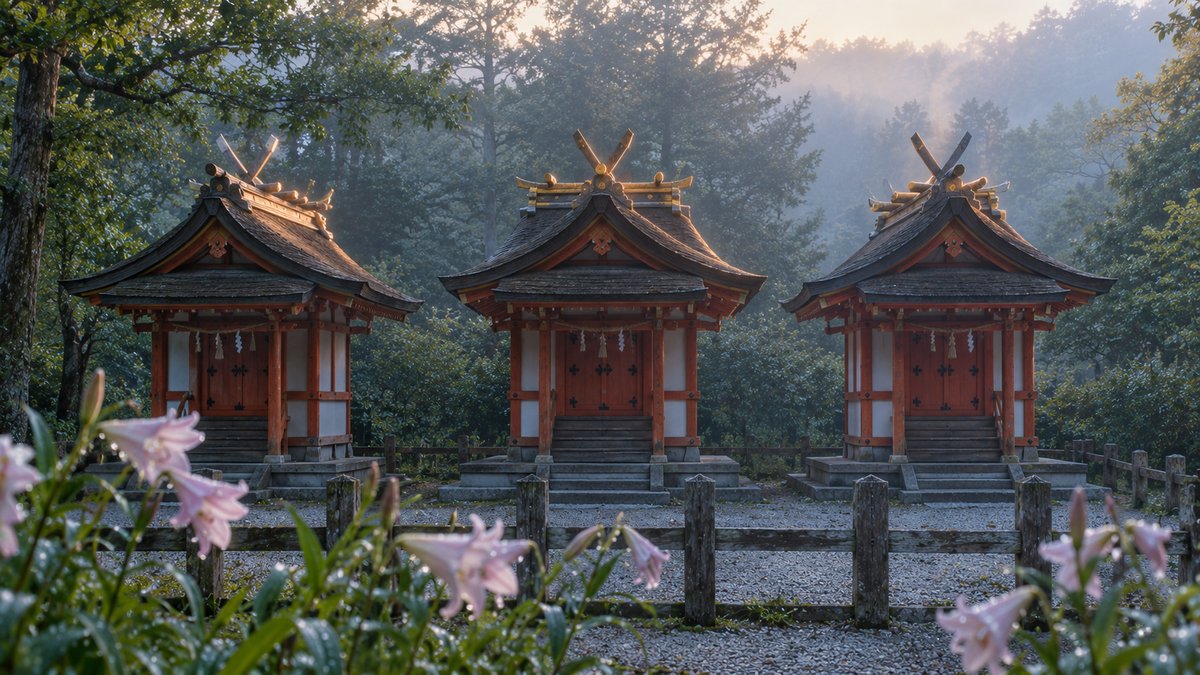
In a corner of central Nara, just a short walk from Kintetsu Nara Station, stands a small shrine called Isagawa Jinja. It is said to be the oldest shrine within the city, founded in the first year of Empress Suiko's reign (593 CE), when Omiwa no Kimi Shiratsutsumi enshrined its deity by imperial decree. Long before the capital of Heijo-kyo was ever built here, this ground was already a place of prayer.
The shrine's main hall is made up of three sanctuaries standing side by side. At the center rests Himetatara Isuzu-hime no Mikoto, who became the empress consort of Japan's first emperor, Jinmu. On either side, her father, the god Sai no Okami, and her mother, the goddess Tamakushi-hime, are enshrined as though leaning close to watch over their child from both sides. It is this arrangement that has long made Isagawa Jinja beloved as a guardian shrine for children.
Every year on June 17th, the shrine holds the Saigusa Festival, also known as the Lily Festival, a prayer for protection against epidemics said to date back to the era of Emperor Monmu in the Asuka period, one of Japan's oldest state festivals still observed today. In the quiet of the morning, with few visitors yet about, a new day begins softly around this small shrine, watched over as it has always been, by the parents at its side.
Today, too, I have safely woken up.
What kind of day today becomes is something we decide for ourselves.
Every day, today is a new birthday, today is the best day of my life, today is Taian, a day of great fortune, today is Ichiryu-manbai, a day when a single seed multiplies ten-thousandfold, today is Tensha-nichi, a day when heaven forgives all.
And every day is a once-in-a-lifetime encounter.
Let's enjoy today, too.
Untaught by anyone, this shrine wakes to the same morning, in the same place, day after day. And yet no single one of those days is ever quite the same as another. Perhaps each time we open our eyes, we too are being quietly watched over by something at our side, beginning, once again, a day that has never existed before.