Start With Something Small
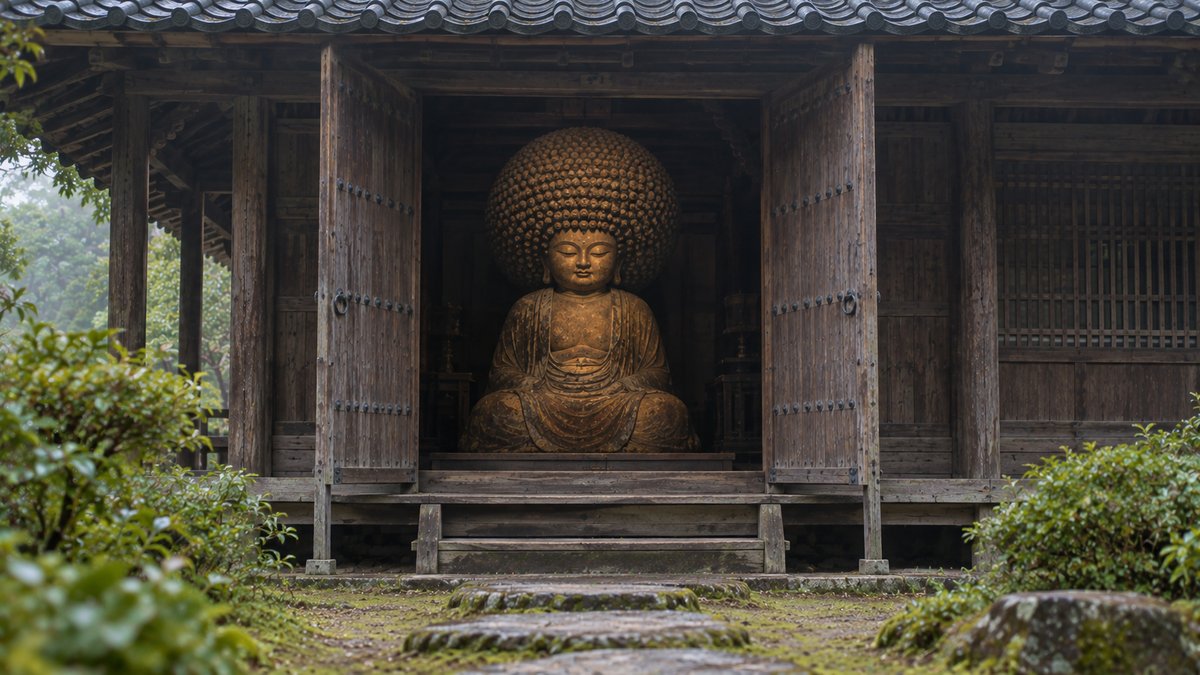
North of Todai-ji Temple, tucked into a quiet residential neighborhood, stands a small temple called Gokuin. Its principal image, a seated statue of the Amida Buddha in Five-Kalpa Contemplation, is said to have been brought from Song-dynasty China by the monk Chogen in the Kamakura period, and anyone who looks up at its head is struck with surprise. The tightly curled hair, rising like an afro, is said to mark the countless eons the Buddha spent in deep contemplation, back when he was still known as the Bodhisattva Dharmakara.
A single kalpa, it is said, is the time it takes for a heavenly maiden, descending once every hundred years, to wear away an enormous boulder with the touch of her feathered robe, until nothing of it remains. Five kalpas is five times that span. Across that unimaginable stretch of time, Dharmakara devoted himself, single-mindedly, to shaping the vow to save all beings.
The serene face of the Buddha now seated quietly within the hall was not reached in a single day. It is a form arrived at only after an unimaginable length of time spent in unbroken contemplation.
"I can't produce great results right away."
Many people may feel this way.
It's alright. Each person has a pace that suits them.
Let's start with something small, something unremarkable.
For example, try putting on your pants starting with your non-dominant leg, take a different route than the one you usually walk, say "hello" or "thank you" to the people around you, and so on.
Do that, and something inside you will begin to change.
The Buddha of Gokuin did not rush toward enlightenment. It simply never stopped contemplating. Perhaps each curl of that hair holds within it the weight of that immeasurable span of time. Even today, within the hall, that same serene face quietly welcomes all who come.