If Words Are Hard, Begin with a Smile or a Nod
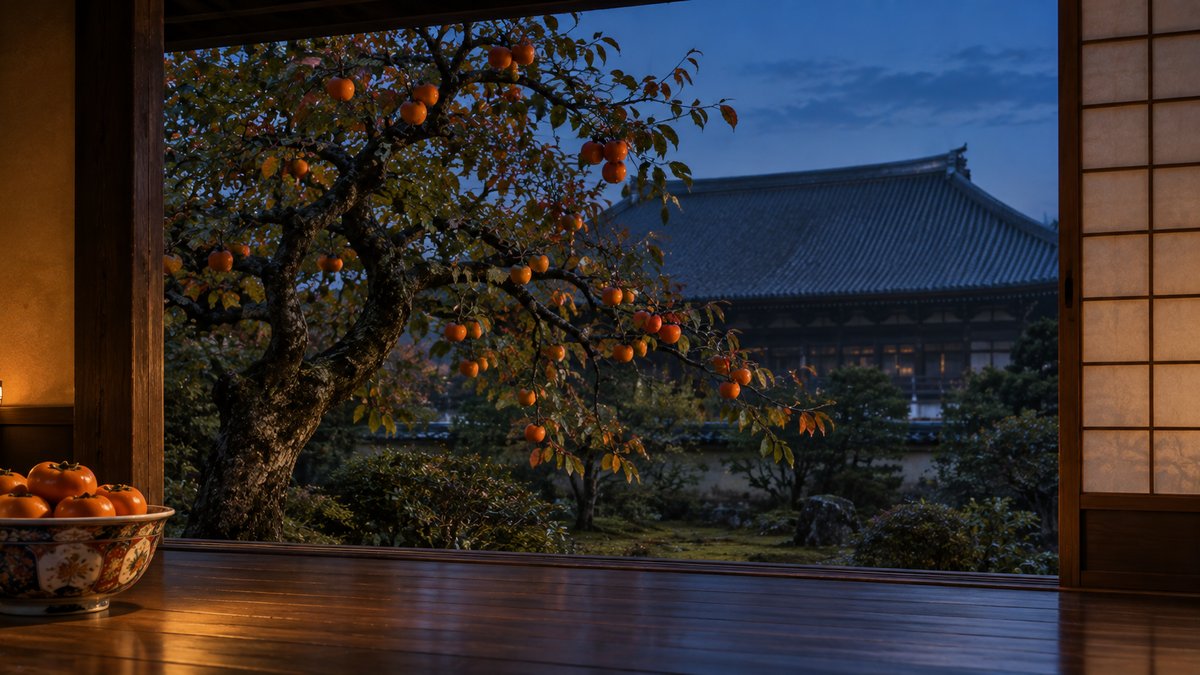
As September draws to an end, in the mountains of Gojo in southern Nara, persimmon shipments began in the middle of this month. Gojo is said to grow more persimmons than any other city, town or village in Japan, and from now until mid-October, its hillside orchards will reach the height of the harvest. In the city of Nara, there is a small garden with a tie to this fruit: Shiki's Garden, on the grounds of a Japanese restaurant in Imakoji-cho. Here once stood Taizanro, said to have been the only high-class inn in Nara in the early years of the Meiji era.
In October 1895, the twenty-eight-year-old poet Masaoka Shiki stayed at this inn. He had gone to the Sino-Japanese War as a war correspondent, coughed up blood on his way home, and after recovering in Kobe and Suma, he was traveling back to Tokyo. His back had begun to trouble him, and even walking was hard. One evening after supper, he asked the maid of the inn whether Gosho persimmons were in season yet. They were, she said. Soon a large bowl of richly painted porcelain was brought in, heaped with persimmons like a small mountain. The maid, sixteen or seventeen years old, took up a knife and began to peel them for him. When he asked where she was from, she said Tsukigase.
As he ate the peeled fruit, the deep boom of a temple bell sounded once. 'Oh, there goes the bell for the first watch of the night,' she said, and went on peeling. When Shiki asked where the bell was, she told him it was the great bell of Todai-ji, striking the first watch. Surprised that Todai-ji could be so near, he looked puzzled, and she stepped out to the wooden corridor beyond the room and slid open a paper screen to show him. Indeed, Todai-ji rose right above them.
While you are still unaccustomed to it, it takes a great deal of courage just to say words such as 'Thank you,' or 'Thank you for the meal,' to those around you.
If that is difficult, at first, try simply responding with gestures or reactions.
For example, answer with a smile, give a small nod, or at times lightly raise a hand to show your thanks.
What matters is to connect hearts with those around you.
It is essential to behave so that both sides feel good.
And as you grow used to it, naturally, words such as 'Thank you,' or 'Thank you for the meal,' will come to your lips on their own.
Some six years later, Shiki wrote about this night in his essay Kudamono, or Fruit. And from this journey to Nara came his most famous haiku: 'I bite into a persimmon, and a bell rings out: Horyu-ji.' Yet the bell he heard that night, as he ate persimmons, was the bell of Todai-ji. On the site of Taizanro there still stands an old persimmon tree thought to date from those days, and beyond it, you can see the great roof of the Daibutsu-den and Mount Wakakusa. According to the essay, above the trees beyond the screen, the moon was shining forlornly. Tonight is the night of the mid-autumn moon.