Put Yourself in Someone's Shoes
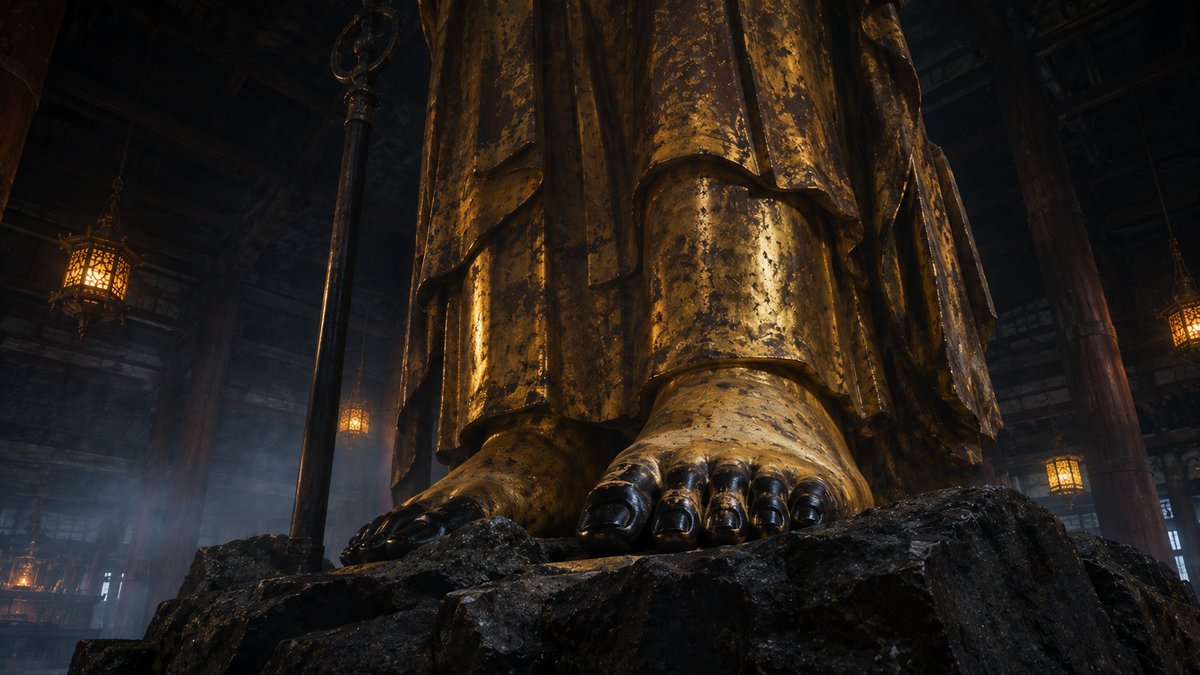
The approach to Hasedera Temple curves through the mountains of Hatsuse, its covered stairway turning again and again as it climbs toward the main hall. Beyond the three hundred and ninety-nine stone steps, within the inner sanctuary, an Eleven-Faced Kannon over ten meters tall stands quietly upon a great rock pedestal. Carved in 1538, during the Muromachi period, it is said to be one of the largest wooden Buddhist statues in Japan.
Only during certain periods of the year are visitors permitted to enter that inner sanctuary. Purified with fragrant powder and a five-colored cord tied around the wrist, each person draws close to the statue's feet. What the outstretched hand touches is the Kannon's own feet.
Over the long centuries, countless hands must have reached out and touched that same spot. What was once gilded in gold has, through the fingertips of so many, been worn dark.
Think by "putting yourself in someone's shoes."
So, what is a concrete way to do that?
There is a clear expression for this in English.
Today, let's step away from Japanese and find a hint in English instead.
" Put yourself in someone's shoes "
Literally: "Put on that person's shoes."
Visitors often say that in the moment their hand touched the Kannon's feet, no words were needed. Only the solid, steady feel of wood against the palm remained. Those feet, worn dark by countless hands, are proof that people have reached out and stood in that very place for hundreds of years. Even today, someone quietly extends a hand, touching that same spot once more.