Every Day, a Once-in-a-Lifetime Encounter
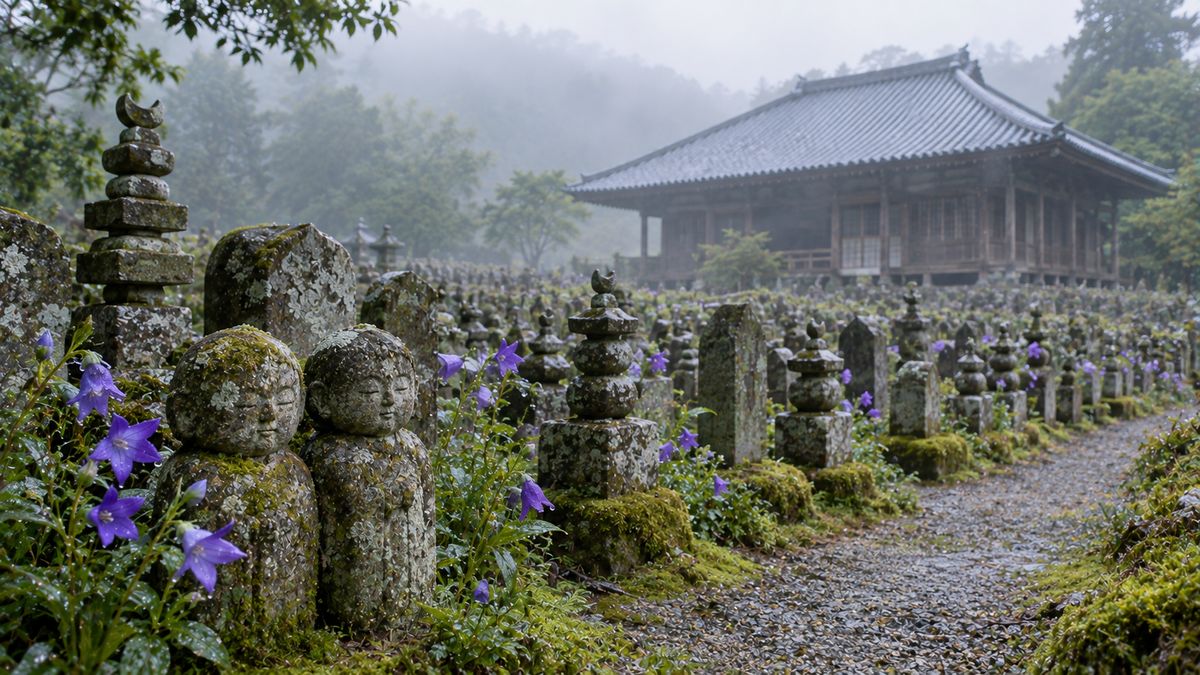
In a corner of Naramachi stands the Main Hall of Gokuraku-bo, part of Gango-ji Temple, said to occupy the very spot where the scholar-monk Chiko once kept his quarters. In the Tenpyo era, Chiko had a close friend and fellow student named Raiko. They shared the same room, studied under the same master, and spent years together, side by side.
One day, Raiko passed away, leaving Chiko behind. While his grief still remained unhealed, Chiko is said to have seen Raiko in a dream one night, standing peacefully beside Amida Buddha, having attained rebirth in the Pure Land. Upon waking, Chiko is said to have had a painter render that vision, hanging it in his own quarters to gaze upon quietly, day after day.
This is the origin of what is known today as the Chiko Mandala. The original was lost amid the turmoil of the medieval era, and what now rests in the Horin-kan Hall is a copy made during the Muromachi period — yet the form of a prayer offered in memory of a friend has been quietly carried across more than five hundred years.
"Something that seems ordinary is not always ordinary."
It happens more often than one might think — someone you saw as though it were nothing, just last month, suddenly becomes someone you can never see again.
After all, the scenery that looks the same day after day, the places that seem unchanged — none of it is truly the same. None of it is truly ordinary.
Every day is a once-in-a-lifetime encounter.
What Chiko poured into that painting may have been nothing more than a quiet longing for a friend he could no longer speak with. Perhaps it is only when we realize that someone who once stood beside us as a matter of course was never truly ordinary, that we first feel the need to hold their memory in some lasting form.