Where Knowing Begins
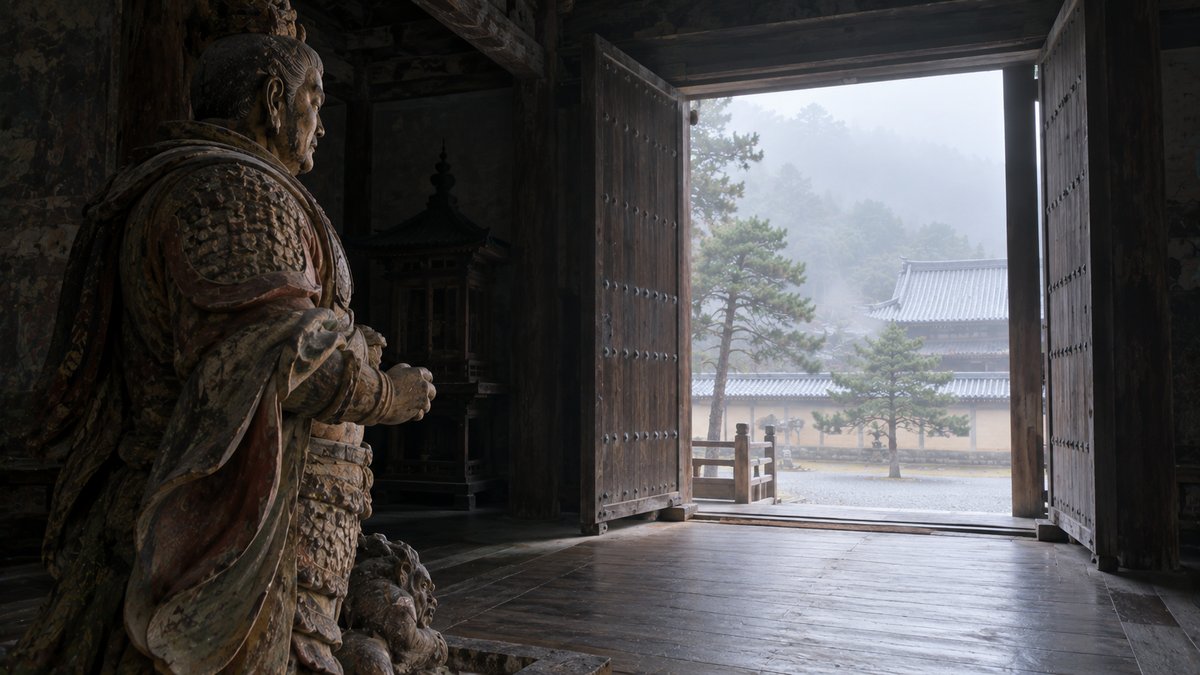
A short walk west of Todai-ji's Great Buddha Hall stands a quiet hall known as the Kaidan-do, the Ordination Hall. Within it, four towering statues of the Four Heavenly Kings encircle the ordination platform, one guarding each direction. Their fierce expressions seem fixed not on the pilgrims before them, but on something distant and unseen.
In the sixth year of Tenpyo-shoho (754), the monk Ganjin — who had endured great hardship before finally reaching Japan — built an ordination platform on this ground and conferred the Buddhist precepts upon Retired Emperor Shomu and others. Those who came to walk the path of Buddhism first received here a single piece of knowledge: what to uphold, and how to act.
More than twelve centuries later, the Four Heavenly Kings still gaze into the distance, their expressions unchanged.
In life, after all, there is a world of difference between knowing something and not knowing it.
And even if you know it, acting on it and not acting on it are entirely different things.
So let us begin by knowing.
Of course, knowing may sometimes bring suffering along with it.
But let us have the courage to know.
Everything begins with knowing.
Step inside the hall, and you notice the guardians' gaze still fixed on something far beyond the room. What lies at the end of that gaze is something each visitor must answer for themselves, in the steps they take once they walk back out.