Sometimes, Try Accepting It Openly
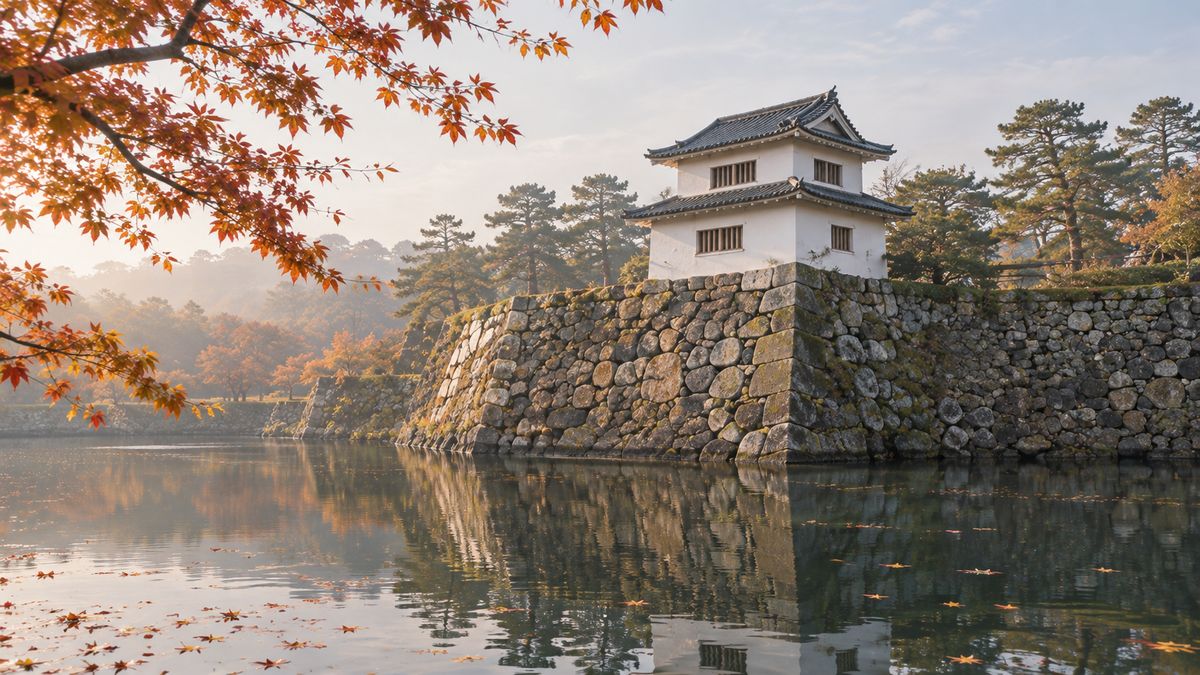
Walking through the old castle town, you see high stone walls and a white-walled turret rise beyond the moat. These are the ruins of Yamato-Koriyama Castle. In 1585, the man who entered this castle was Hidenaga, younger brother of Toyotomi Hideyoshi. The gates and turrets were rebuilt in the Showa era, but the stone walls still carry traces of the great construction work of Hidenaga's time.
For that work, it is said, stones were gathered from far and wide and set into the walls: stones said to be foundation stones of the Rajomon Gate of the ancient capital, stone Buddhas, even five-tiered stone pagodas. In the north face of the keep base, you can still see what is called the upside-down Jizo, a stone figure laid into the wall head downward. Climb the keep base, some eight and a half meters high, and on a clear day you can see as far as the Great Audience Hall of the Heijo Palace Site, Yakushi-ji Temple and the hills of Mount Wakakusa.
It was April of 1586, the year after Hidenaga became master of the castle. Otomo Sorin, a lord from Kyushu, came to visit Hideyoshi. The documents of the Otomo family preserve words said to be from this occasion: for private matters, turn to Sen no Rikyu; for public matters, turn to Hidenaga. So he was told, it is said. Beside the ruler of the land, there were people to bring matters to, and to exchange words with.
In life, there are times when those around us offer us apt advice.
Whatever you do, never say things like 'Leave me alone.' or 'I will do it my own way.'
What matters is to realize that the other person is not rejecting you as a person.
The advice of those around you often, unexpectedly, points out things you had not noticed yourself, and listening openly and putting it into practice often turns out well.
Sometimes, try accepting it openly.
However, whether to accept it is also up to you, and do not forget that the responsibility for the result of accepting it lies not with those around you, but with you.
In the first month of 1591, Hidenaga passed away in this castle. On a hill to the southwest of the castle, at the mound called Dainagon-zuka, a five-tiered stone pagoda raised in the Edo period by temple priests and the people of the town still stands quietly. What Hidenaga said at his brother's side, and which words Hideyoshi took to heart, have not all been written down. In the stone walls beyond the moat, stones carried here from many places still hold up the castle ruins, more than four hundred years on.