Your Whole Life Has Been One Grand Prelude
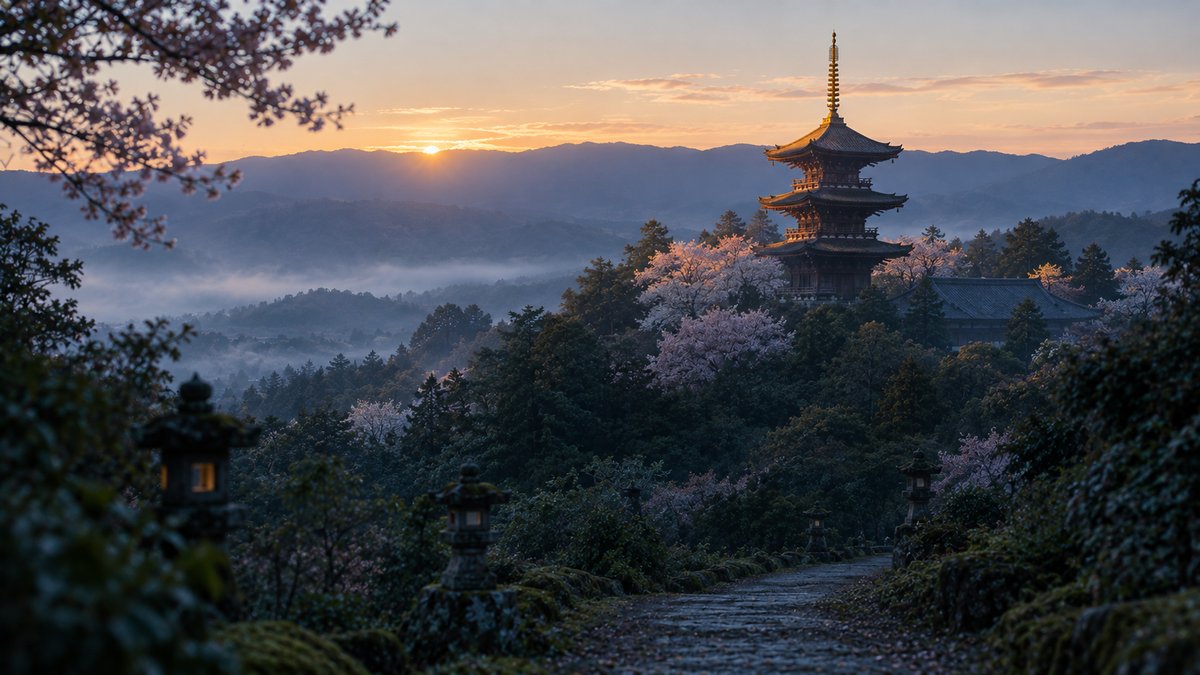
Tsubosaka-dera Temple stands quietly at the top of a stone stairway in the hills of Takatori, Nara. Its principal image, an Eleven-Headed Thousand-Armed Kannon, is enshrined as the sixth temple of the Saigoku Thirty-Three Kannon Pilgrimage, and has long been known as the "Kannon of the Eyes," drawing the faith of those suffering from eye ailments.
In the Edo period, a blind man named Sawaichi is said to have lived with his wife Osato at the foot of this temple. Before dawn, without telling anyone, Osato walked this path for three years, praying to the Tsubosaka Kannon for her husband's eyes to be healed. One morning, Sawaichi noticed her absence and, suspecting her of unfaithfulness, confronted her — only to learn the truth, and feel ashamed of his own narrow heart. From then on, the couple is said to have visited the Kannon hall together.
Yet on the very morning their three years of prayer were to be fulfilled, Sawaichi, fearing that his blindness would one day become a burden to his wife, threw himself alone into the valley below. Osato, following him, threw herself into the same depths — but moved by the depth of their love, the power of Kannon is said to have saved both their lives, and restored the light to Sawaichi's eyes.
If you're suffering because of your past, why not try thinking of it this way?
Your long, painful life until now was one grand "prelude" — a setup for the joyful days beginning from this very moment.
Without that life you've lived, you never could have met the joyful life now waiting for you.
If you think of it that way, you can affirm your entire life, just as it's been.
Thank you, my life!
No one today can know what Sawaichi felt through those three years of darkness. But it seems certain that the light which finally reached him arrived with a depth that only someone who had known such darkness could ever feel.