Don't Lose Your Heart, Even in the Busiest of Days
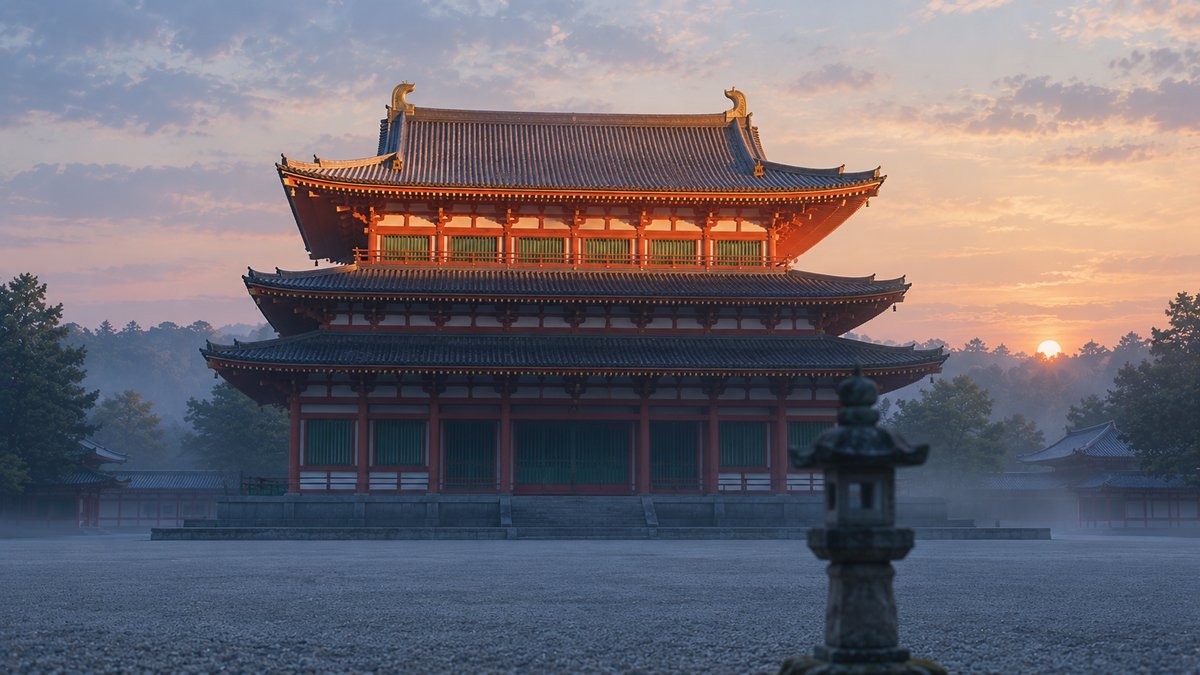
Yakushi-ji Temple stands in Nishinokyo, in the western part of Nara. Its Main Hall, the Kondo, was lost to fire in 1528, and for centuries afterward the temple made do with only a temporary hall in its place. It was not until the 1960s — nearly four hundred years later — that a movement began to restore the temple to its former form.
The temple's chief priest at the time, Koin Takada, resolved to fund the reconstruction through a nationwide sutra-copying campaign, asking a thousand yen for each copy and aiming for one million in all. Day after day, he is said to have traveled the country, meeting people, speaking to them, and bowing his head again and again — a pace of life that, to any onlooker, must have seemed relentless.
And yet, in every single copied sutra that arrived at the temple, there lived a quiet moment: someone, somewhere, pausing amid their own busy day to sit before a sheet of paper and carefully guide a brush across it. After an almost unimaginable number of such prayers had gathered — one million in all — the Main Hall once again caught the light, in 1976.
Busy again today?
Being busy, in itself, is not a bad thing.
To be busy means that your life is full.
But in Japanese, the character for "busy" — 忙 (isogashii) — is written by joining 心 (heart) and 亡 (to lose): literally, to lose one's heart.
Even in the busiest of times, don't lose your heart. Enjoy that busyness, and live with gratitude.
Many travelers today gaze up at the temple's rooftiles without ever knowing the story of that sutra-copying campaign. But beneath those hurried years, page after page, there lived countless quiet moments of an undivided heart. Busyness is no reason to lose your heart. If anything, it may be in holding on to that heart, again and again, that something lasting finally comes into view.