How Kindness Is Received Depends on the Other Person
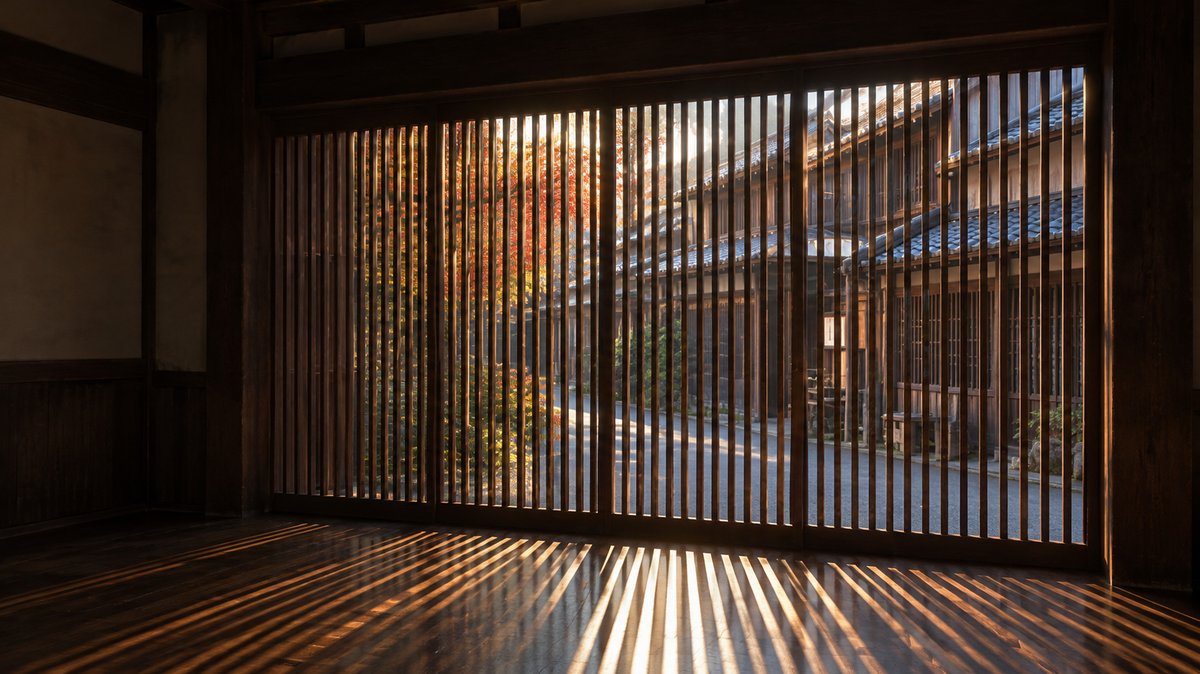
Naramachi, which spreads across what were once the grounds of Gango-ji Temple, is a town where old wooden townhouses still stand side by side. Walking its narrow lanes, I see fine wooden lattices running along the fronts of the homes, one after another. The autumn afternoon light slanted in, and each slat of the lattices cast a thin stripe of shadow onto the lane.
In one corner of the town, in Gangoji-cho, stands Naramachi Koshi-no-Ie, the Lattice Home. It recreates a townhouse of this town from the late Edo to the Meiji period, and anyone may step inside free of charge. Its frontage is narrow, and it stretches far back toward the rear. I passed through the earthen-floored passage, looked at the chest-staircase and the inner garden, then went back to the front shop room and sat down.
When I had looked from the lane outside, it was dark behind the lattice, and I could hardly see anything inside. But sitting on the inner side, I could see the street out front surprisingly well. The voices of people passing by, a bicycle going past, someone stopping to bring their face near the lattice. Yet that person's eyes surely did not catch me at all. It is the very same lattice, and yet what can be seen is entirely different depending on which side you stand. Hard to see in from outside, easy to see out from within: this, it is said, was the wisdom of people long ago.
Being kind to someone and spoiling someone are two completely different things.
However, even if we respect the other person (rather than spoiling them) and treat them with kindness, if that person is presuming on our kindness, the result will be a disappointing one.
How ironic it is.
Then, even if, for the other person's sake, we treat them firmly and with love so they can break free of that dependence, with what may be called true kindness, the other person may mistakenly feel that they have been scolded, been angrily told off, been warned, or been made to lose face, and in some cases, it often happens that we even become the target of unjust resentment.
In short, whatever our intentions may be, how they are taken depends largely on the other person.
Let us accept this to some degree and let it be.
Leaving the Lattice Home, I stood in the lane out front once more. Looking back, the shop room where I had been sitting a moment ago had sunk into the darkness behind the lattice, and nothing could be seen any longer. The afternoon light slowly tilted, and the shadows of the lattice stretched thin and long across the lane. With steps that felt just a little lighter, I began to walk on, deeper into Naramachi.