Not Troubled by the Differences
In the north of the Nara Basin, Yamatokoriyama has long been known as the town of goldfish. It is said that it all began in 1724, when Yanagisawa Yoshisato moved from the province of Kai to take charge of the Koriyama domain, and one of his retainers brought goldfish with him. By the end of the Edo period, raising them had become a side occupation for the samurai of the domain, and after the Meiji era began, it spread to farming households as well. The area has always had many ponds for watering the fields, and the water fleas that thrive in them are said to have made ideal food for young goldfish.
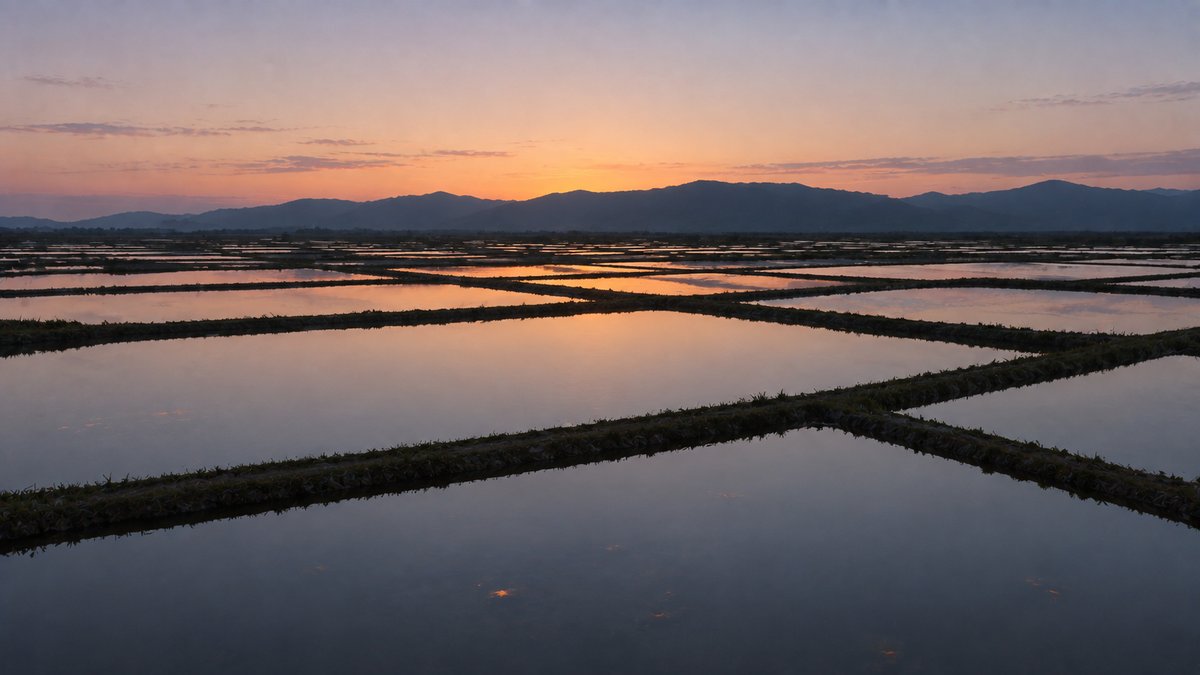
Walk through the town, and in places, square sheets of water that could easily be taken for rice paddies spread out as far as you can see. Every one of them is a pond for raising goldfish. Now and then, a Kintetsu train passes nearby. Many kinds of goldfish are raised in these ponds. There are the varieties known as fancy goldfish, such as the ryukin, with its long tail fins, and the plump ranchu, which has no dorsal fin; and there are the small wakin, familiar from goldfish scooping at summer festivals. Over sixty percent of the goldfish raised in this town are wakin, and most of them are the ones called koaka, little red fish born that same year.
About half a month after hatching, the young goldfish are sorted by the shape of their tail fins. This is repeated again and again, and only the well-formed fish are kept. Each spring, when the cherry trees are in full bloom, a goldfish show is held at Yanagisawa Shrine, and those who raised them bring their finest fish. In summer, on the other hand, the town hosts a national goldfish scooping championship. Standing before a tank in which about a thousand goldfish swim, each contestant holds a single paper scoop and tries to catch as many as they can in three minutes. The championship began in 1995.
All too often, "comparing" things, such as comparing ourselves with others, brings great worry and suffering in life.
And yet, on the other hand, comparison itself has its important moments in life, too.
By comparing, for example, we can see the difference between what is expensive and what is inexpensive, or the difference between what is convenient and what we deliberately put time and effort into.
What matters is "to keep from being troubled by the differences" that comparison reveals.
In the evening, as the sun sinks toward Mount Ikoma, pond after pond is tinged with the same evening sky. The ranchu ponds and the koaka ponds can no longer be told apart from a distance. Along the path beside the ponds, a child carrying a small plastic bag heads home, stopping every so often. Inside the bag, a single koaka turns around in the evening light. The child has already given it a name.