Remember the Effort of the Many People Who Support Our Everyday Life
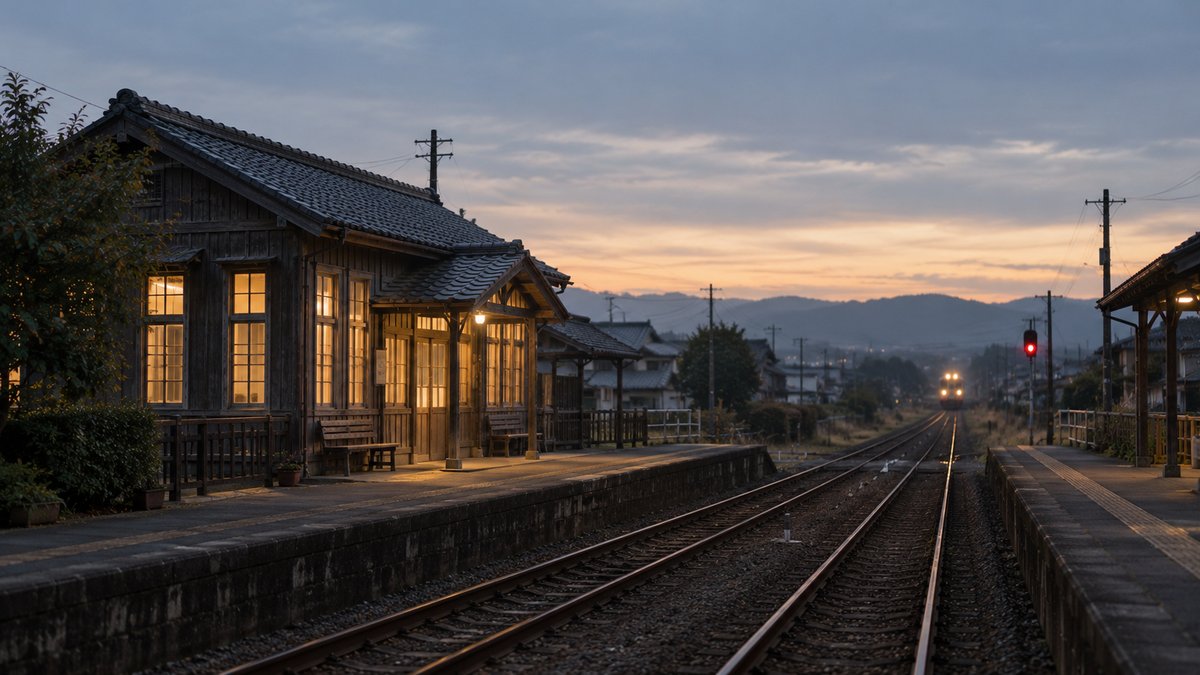
From Naramachi, I walk south. Passing through streets lined with old townhouses, I come out onto the Tenri Kaido road, and facing it stands a small station building with a tiled roof. This is Kyobate Station on the JR Sakurai Line, also known as the Manyo Mahoroba Line. The area once marked the southern edge of the outer district of the ancient capital, Heijo-kyo, and the name is said to mean 'the end of the capital.'
The station building is a single-story wooden structure built in 1898. After about 120 years of service, it was handed over by JR to the city of Nara in 2017, and its tall, narrow windows and other features were returned to how they looked in the Meiji era. The former station office has become a cafe, and in the waiting room there is a piano that anyone may play. There are no station staff. Instead, local people serve as 'community stationmasters,' giving information on train times and destinations, and taking care of cleaning the station.
The Sakurai Line is single-track along its entire length. With only one track, trains heading in opposite directions pass each other at stations like Kyobate, where passing is possible. If one train has not arrived, the other cannot set off. On the platforms and in the waiting room, people wait for their own trains.
Living in Japan, we tend to forget to be grateful that things run smoothly every day, almost without our noticing.
For example, when a train is greatly delayed because a safety check was carried out, we find ourselves lamenting our own bad luck.
Our plans fall apart completely, and we complain, 'What are you going to do about this?'
At such times, let us stop and think for a moment.
What if that safety check had been neglected, a serious accident had happened, and we ourselves had been caught up in it?
Depending on the circumstances, we might even have died.
No matter how important the plans that a delayed train throws into disorder, it is surely better than losing one's life.
Let us remember, even just once in a while, that the everyday things we take for granted are made possible by the efforts of many people.
Before long, the sound of a train draws near from far down the track. From the train, arriving a little later than scheduled, a few people step off, and those who were waiting climb aboard. On the opposite platform, another train quietly begins to move. Built in the Meiji era, the station building was passed from the railway company to the city, and today, cared for by local hands, it still stands in the same place. From the place once called the end of the capital, the train heads on again toward the next station.