This May Be a Sign That Something Better Is Coming
In the Akishino district, in the northwest of Nara city, stands a temple called Akishino-dera. It was built as the last official temple of the age when Nara was the capital. It is said to have been founded in the Hōki era, near the end of the eighth century, by the Hossō scholar-monk Zenshu at the wish of Emperor Kōnin, and the work went on into the reign of the next emperor, Kanmu. There was a golden hall, a pagoda to the east and one to the west, a lecture hall — it was laid out as a large temple complex.
In the year 1135, fire came, and every major hall and tower but the lecture hall burned to the ground. The capital had long since moved elsewhere, and there was no strength to raise the temple again on the same scale. The lecture hall that had been spared was later worked on and rebuilt as the main hall. That hall, a National Treasure today, stands where the old lecture hall stood; it is a Kamakura reconstruction, with Nara-period style and Kamakura detail set one over the other.
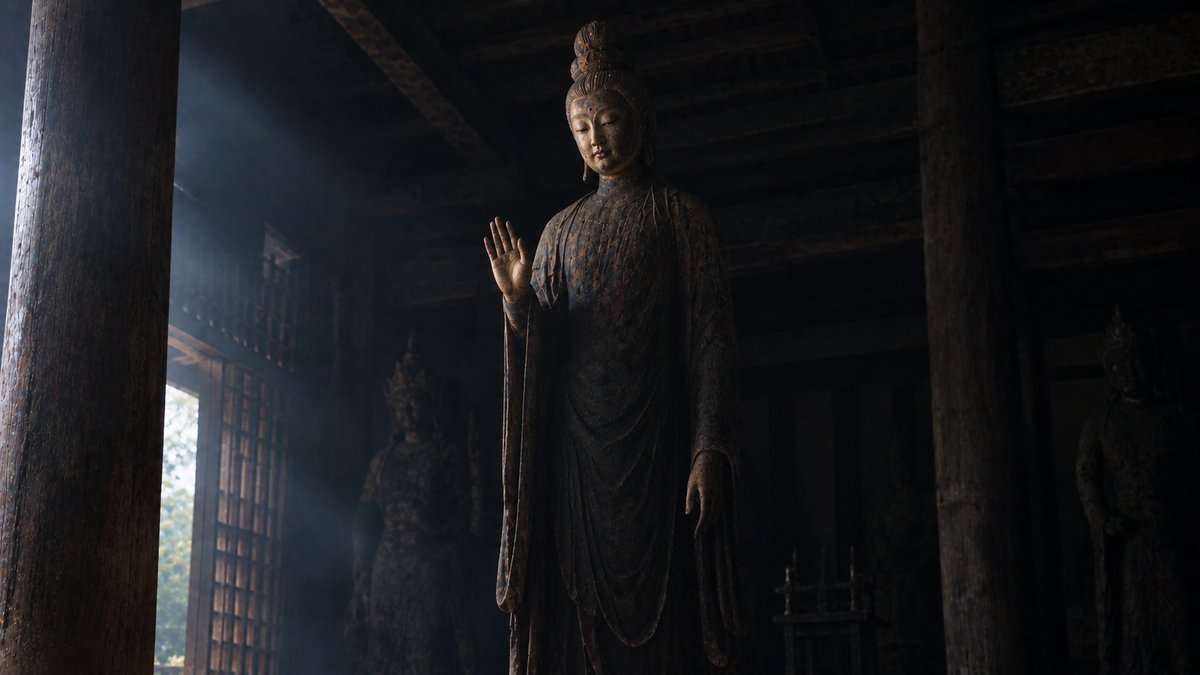
Inside that hall stands a figure called Gigeiten, a heavenly woman who presides over the arts. No other old statue by this name is known anywhere in Japan. Its head is the one made long ago, in the Tenpyō era, by the hollow dry-lacquer method, and it has come down just as it was. Its body was carved anew, in wood, far later, in the age of Kamakura. Two eras are joined within the one figure, and yet, however long you look up at it, you cannot tell where the seam is.
That what you had planned, or what you had expected, does not come about — this is a common thing in life.
At such a time, do not lose heart.
Because it is also a common thing in life that, afterward, a better result you had never expected lies waiting ahead.
When something you had planned or expected does not come true, let yourself grow excited, and think: "This may be a sign that something better is about to happen."
That very feeling will guide you toward the better result that, in fact, awaits.
Inside the main hall it is dim, even at midday, and very still. Those who visit stand before Gigeiten longer than they had meant to. The great complex the Nara court once pictured was never, in the end, finished the way it had been drawn. What remained after the fire is smaller, and newer, and pieced together from several ages at once. And still, the figure people travel a long way to stand before is this one. The Tenpyō head lost the body it first belonged to, and, centuries later, was joined to another. No one standing before it, however hard they look, can find the join.